China Top 10 Puppy Collar Manufacturers for Global Buyers
A Puppy Collar looks like a small purchase, yet it touches a puppy’s comfort, safety, and daily routine. Roger Caras, an animal-care authority, captured the bond behind that choice: “Dogs are not our whole life, but they make our lives whole.” For global buyers, thoughtful sourcing means looking beyond color and price. A collar should feel smooth against a puppy’s neck, adjust without pinching, and use hardware that stays secure during ordinary walks.
The manufacturers in this guide are considered through practical details: material consistency, stitching, buckle quality, sizing options, customization, and communication with overseas buyers. A neat sample is not enough. Buyers should also ask how dimensions are checked, how repeat orders are kept consistent, and what happens when a batch falls short. Small details matter. A rough seam can irritate skin; an awkward buckle can slow a hurried adjustment.
No supplier is perfect. Product claims still need verification, and a polished catalog cannot replace hands-on inspection. That is an easy point to overlook. This Top 10 overview is intended to help buyers compare options carefully, request samples, and ask better questions before committing to volume. The best Puppy Collar partner is not simply the one with the lowest quote, but the one whose quality and communication remain dependable after the first order.
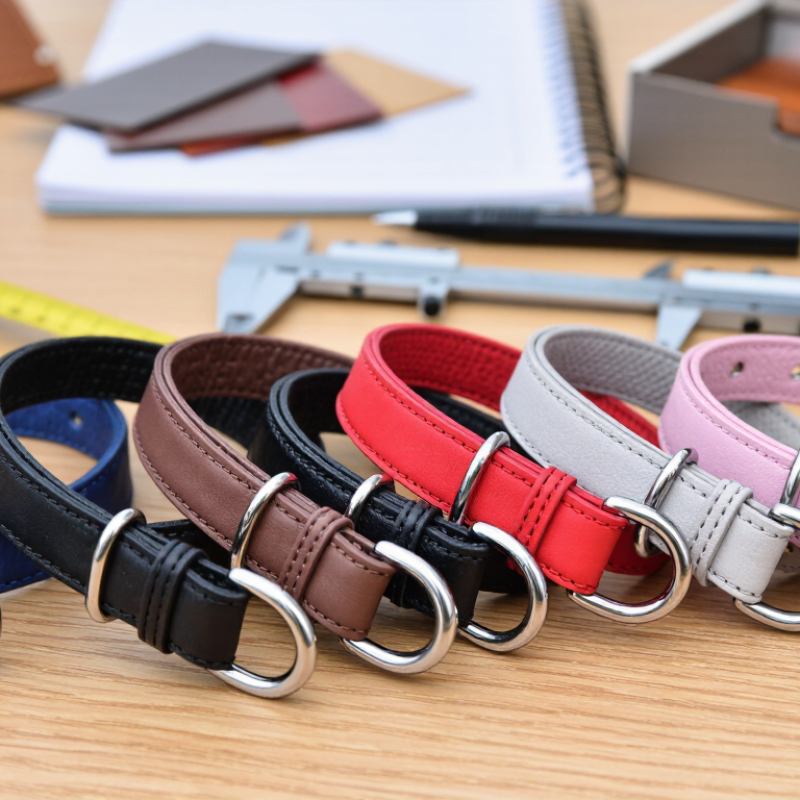
Puppy Collar Types, Materials, and Essential Safety Features
Puppy collars should match a growing dog, not just a product photo. Flat nylon is lightweight and dries quickly, while padded mesh can reduce rubbing on short walks. Biothane-coated webbing wipes clean, but stiff edges may irritate a puppy’s neck. Leather can soften with use, though wet collars need careful drying. Grand View Research tracks collars and leashes as a distinct pet-accessories category, making material and hardware useful points to compare when sourcing. APPA’s 2025 State of the Industry report estimated U.S. pet-industry spending at $152 billion in 2024. That figure signals a large market, not proof that any collar is safe.
Fit matters. Leave room for two fingers between collar and neck, then check again as the puppy grows. A quick-release or breakaway design may help reduce snagging risk, but no release mechanism suits every activity. Metal rings should feel smooth, with no sharp welds; stitching should hold under a firm hand check. Reflective trim helps in dim light. Small details matter. I would not rely on a neat specification sheet alone: inspect samples, test closures, and ask suppliers how they check seams and hardware. A collar that slips over the ears is too loose; one that leaves marks needs adjustment.
Puppy Collar Materials: Typical Water Resistance
A qualitative comparison of common collar materials. Ratings are indicative, not laboratory measurements; actual performance depends on material grade, coating, and construction.
Essential safety checks: Choose an adjustable collar with secure hardware and smooth edges. It should fit snugly without restricting breathing or movement; check the fit regularly as your puppy grows. Attach identification and supervise your puppy while wearing a collar.
Qualitative scale: 1 = lower water resistance; 5 = higher water resistance. This is a general material comparison, not a product test or brand ranking.
China’s Puppy Collar Manufacturing Industry and Export Landscape
China’s puppy-collar industry serves both domestic demand and overseas buyers. Grand View Research estimated the global pet accessories market at USD 9.2 billion in 2023, covering collars and leashes alongside other products. That figure signals opportunity, but it is not a collar-only estimate. China’s 2023 Pet Industry White Paper reported urban dog and cat spending of RMB 279.3 billion. Domestic demand can help suppliers refine sizing, materials, and packaging before export orders grow.
Production often involves narrow-webbing suppliers, metal hardware workshops, sewing lines, and final inspection. Buyers should check stitching density, buckle closure, edge finishing, and size tolerances on physical samples. Small details matter. A collar that looks neat may still rub a puppy’s neck if its edges are stiff. Export statistics need careful reading, too. UN Comtrade’s HS 4201 category covers animal saddlery and harness products, not puppy collars alone, so its trade totals cannot show collar exports precisely. That is useful, but imperfect. Importers comparing Chinese factories should request material specifications, batch inspection records, and clear carton dimensions. These checks make quotes easier to compare across suppliers and reduce avoidable surprises during shipment.
Comparing Manufacturers by Product Range, Quality, and Customization
When comparing China’s puppy collar manufacturers, look beyond catalogue size. A broad range may include lightweight nylon collars, soft padded designs, adjustable webbing, and matching leads. Check whether sizing covers small neck measurements and whether adjustment hardware moves smoothly without slipping. Ask for close-up photos of stitching, edge finishing, buckle fit, and leash-ring attachment. These details are easier to judge than a polished product image. Request samples when possible. One sample cannot prove every production batch, but it can reveal comfort and workmanship.
Quality depends on repeatable specifications, not just material names. Ask suppliers to state webbing width, material composition, buckle type, color tolerance, and inspection steps in writing. Compare how they handle size charts, packaging, and replacement components. Customization may include colors, woven patterns, labels, packaging, or logo placement. Confirm minimum order quantities, sample charges, lead times, and which changes affect price. Small orders can expose weak communication. That matters.
Tips: Measure a puppy’s neck with room for two fingers, then compare the result with the manufacturer’s size chart. Ask for a pre-production sample showing your chosen color and hardware. Check the collar after gentle pulling and repeated adjustment. Do not assume a low quote includes custom packaging or final inspection. Some suppliers may answer vaguely; request specific details in writing before comparing offers.
How to Evaluate and Source Puppy Collars from Chinese Suppliers
Sourcing puppy collars from Chinese suppliers starts with a clear product brief. Specify neck-size ranges, collar width, adjustment range, materials, buckle type, and target order volume. Ask for a size chart and measure a sample around its full adjustment range. Check whether the collar lies flat and whether its edges feel smooth against a puppy’s skin. Small details matter.
Request samples before discussing a large order. Inspect stitching near the D-ring, test the buckle repeatedly, and check for loose threads, strong odors, or uneven coating. Ask how materials and dimensions are checked during production, and request recent inspection records when available. Confirm sample and bulk-production timelines, minimum quantities, packaging details, and how defects are handled. A polished catalog is not proof of consistent production. Even a careful checklist can miss something, so document sample approval in writing.
Tips: Compare at least three suppliers using the same questions. Keep dated photos and measurements of approved samples. Ask for a revised sample if a detail is unclear; accepting a small mismatch can create a larger batch problem.


 House of Worship
 Transportation
 Trade shows led display
 retail
 Creative Led Solutions
 Hospitality
 Higher Education
 Corporate LED