How to Choose an Automatic Voltage Regulator in 2026
Choosing an Automatic Voltage Regulator in 2026 is not just a matter of matching watts. It means protecting equipment from the voltage swings it actually experiences. The International Energy Agency’s Electricity 2024 report projects global electricity demand will grow by an average of 3.4% annually from 2024 through 2026. More demand does not guarantee poor power quality, but it makes careful electrical planning harder to ignore. A workshop motor starting under load, a server room running overnight, and a clinic’s sensitive instruments all face different risks.
Power-quality researcher Dr. Ewald Fuchs’s published work offers a useful selection principle: evaluate voltage quality where equipment connects, not only at the incoming supply. That distinction matters. A regulator that looks adequate on a nameplate may respond too slowly to a sudden load change, or lack capacity for a motor’s startup current. The details count.
This guide explains how to compare input and output ranges, correction speed, rated capacity, phase configuration, and protection features. It also considers waveform distortion, installation conditions, and maintenance access. Check the load profile before comparing models. Measure, don’t guess. A small oversight—such as ignoring inrush current—can turn an apparently sensible purchase into an unreliable one. Manufacturer specifications should be checked against site measurements and qualified electrical advice. No single model suits every installation. The right choice is the one that fits the actual supply, load, and operating environment, with enough margin for foreseeable changes.
Understanding What an Automatic Voltage Regulator Does
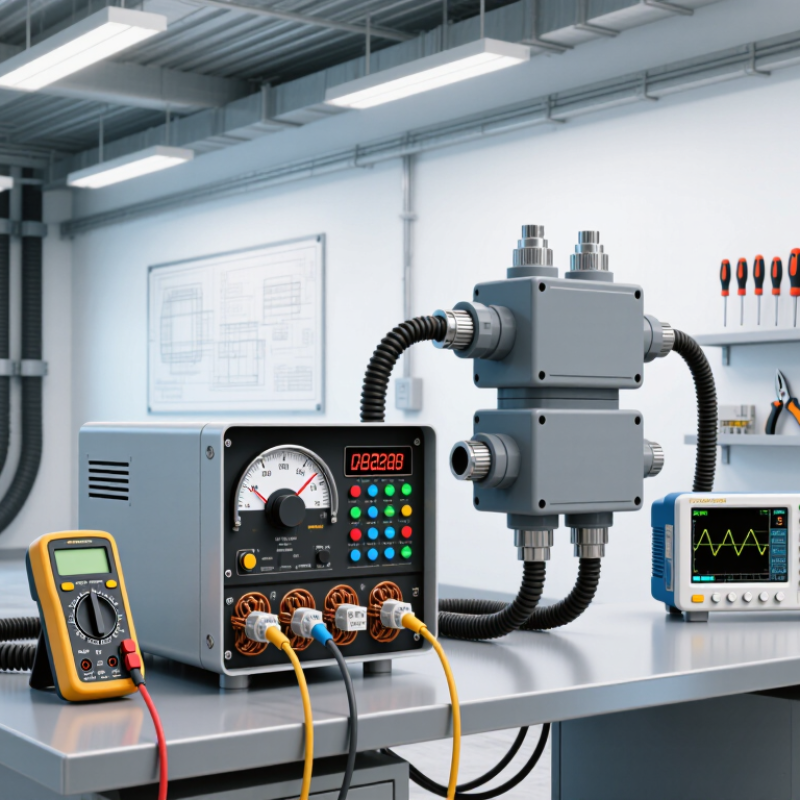
An automatic voltage regulator (AVR) monitors incoming electrical voltage and adjusts it when it moves outside a set range. Its purpose is to provide connected equipment with steadier voltage. It does not create electricity or store it. Picture a refrigerator compressor starting and the supply briefly dipping. The AVR responds by correcting its output. Depending on its design, it may switch transformer taps or use another method to regulate voltage. That distinction matters.
Without regulation, persistently low or high voltage can make motors run hot, lights flicker, or electronics behave unpredictably. An AVR can reduce these stresses, but it cannot fix every power problem. It will not keep equipment running during an outage, and separate surge protection may still be useful. Each unit also has limits: capacity, input-voltage range, response time, and supported load type all affect performance. A small desktop regulator, for example, may not suit a pump with a strong startup current.
Before choosing an AVR in 2026, check the equipment’s voltage, power use, startup demand, and the voltage range at your location. Confirm that the regulator is designed for your kind of load; household appliances, office electronics, and industrial equipment can have different needs. A plug-in meter or an electrician’s measurements can help distinguish occasional dips from persistent instability. I would not assume that more capacity automatically means a better match. The overlooked detail is often how the equipment behaves, not just the number on its label.
Assessing Your Equipment and Voltage Requirements
An automatic voltage regulator should match the equipment it protects, not just the voltage printed on a sales sheet. Read each device’s nameplate and record its rated voltage, frequency, phase, and maximum current. Check whether the stated voltage is nominal or a permitted operating range. A workshop may use both 120-volt tools and 240-volt equipment, which can require different regulation arrangements.
Account for startup demand as well as normal operation. Motors, pumps, and compressors can draw several times their running current for a brief period. A regulator sized only for steady load may trip or allow voltage to sag when a motor starts. Measure under load. Note which devices operate simultaneously, and include their combined demand. That detail matters.
Compare the regulator’s input range with the voltage you actually observe at the installation point, ideally during busy and quiet periods. Check its output tolerance against the most sensitive equipment’s requirements; control systems and medical or laboratory instruments may need tighter limits than basic lighting. Also consider frequency compatibility, phase configuration, ventilation, and expected temperature. If readings vary widely, repeat them at different times rather than relying on one convenient measurement. It is easy to overlook a brief dip. Leave capacity for reasonable load changes, but avoid choosing an oversized unit without checking its performance at the expected operating load.
Choosing an AVR Type for Your Power Conditions
How to Choose an Automatic Voltage Regulator in 2026
Choosing an AVR Type for Your Power Conditions
Start with a power-quality log, not the appliance label. Record input voltage during startup, peak load, and quiet periods. EN 50160:2022 states that, under normal conditions, 95% of weekly 10-minute voltage averages on public low-voltage networks should stay within ±10% of nominal voltage. That is a grid benchmark, not a guarantee at your outlet. A compressor starting beside a long cable run may still cause sharp dips.
For occasional, moderate swings, a relay-based AVR can offer straightforward correction. A servo AVR adjusts more gradually, which can suit sensitive equipment facing sustained variation, but its moving parts need maintenance. Static electronic models respond quickly and may fit loads with frequent fluctuations. Match rated capacity to the actual load and startup surge; a unit sized only for steady running can trip when a motor starts. Measure first. Then check the AVR’s correction range, response time, waveform quality, and overload protection against your equipment’s needs.
Tips: Use a true-RMS meter or a power-quality logger, and note the lowest voltage under load. Compare readings with the equipment’s stated input range. If voltage varies widely, the cause may be loose connections or undersized wiring; an AVR cannot repair those faults. That distinction is easy to miss.
Comparing Safety Features, Compatibility, and Maintenance Needs
An automatic voltage regulator should protect equipment without creating a new weak point. Check for overload, over-temperature, and short-circuit protection, plus a clear fault indicator. A sturdy enclosure and accessible disconnect also matter in a workshop or utility closet. Small details matter. Safety claims are useful only when the unit’s ratings match the conditions where it will operate; a protective feature cannot compensate for undersized wiring or poor ventilation.
Compatibility starts with the equipment label. Match the regulator’s input range, output voltage, frequency, and capacity to the actual load. Leave room for startup surges: a refrigerator compressor may briefly draw far more power than its running rating suggests. For sensitive electronics, confirm the output waveform and regulation accuracy rather than relying on a broad “compatible” label. I would double-check these figures; it is easy to focus on watts and miss a mismatch in voltage or frequency.
Maintenance needs vary by design and location. Dust around vents, loose connections, unusual humming, or repeated warning lights deserve attention. Keep airflow clear, inspect the unit at intervals recommended by its manufacturer, and record recurring faults instead of resetting them blindly. Not every installation is easy to assess from a product sheet alone, so an electrician can help when loads or wiring are uncertain.


 House of Worship
 Transportation
 Trade shows led display
 retail
 Creative Led Solutions
 Hospitality
 Higher Education
 Corporate LED