How to Choose the Best Matte Lipstick Supplier?
Choosing the right Matte Lipstick supplier requires more than comparing prices and product photos. A reliable partner should combine consistent formulation, responsible manufacturing, clear communication, and documented quality controls. The ideal supplier must understand how pigments, waxes, oils, and film-forming ingredients affect comfort, coverage, wear time, and removal.
Real-world sampling matters. Apply the lipstick on different skin tones, then observe the finish under natural and indoor light. Check whether it drags across dry areas, settles into lip lines, or changes color after several hours. Small details reveal a great deal. A smooth swatch is not enough.
Ask for ingredient information, batch specifications, safety documentation, and relevant manufacturing certifications. Suppliers should also explain their testing procedures, packaging options, minimum order quantities, production timelines, and complaint-handling process. Transparent answers suggest stronger accountability. Vague promises deserve caution.
The “best” supplier depends on your brand’s priorities. A luxury line may need custom shades and refined packaging, while a growing business may value flexible order quantities and dependable lead times. Lower pricing can look attractive, but unstable color matching may create expensive rework later. That risk is easy to underestimate.
A thoughtful evaluation should include sample approval, written specifications, and a small pilot order before full production. Even experienced buyers can miss important details. Reviewing supplier performance over time is wise, because one successful shipment does not prove lasting consistency. This guide explains how to assess Matte Lipstick suppliers with practical criteria, informed questions, and a realistic view of quality, compliance, and business risk.
Understanding Matte Lipstick Suppliers and Their Product Range
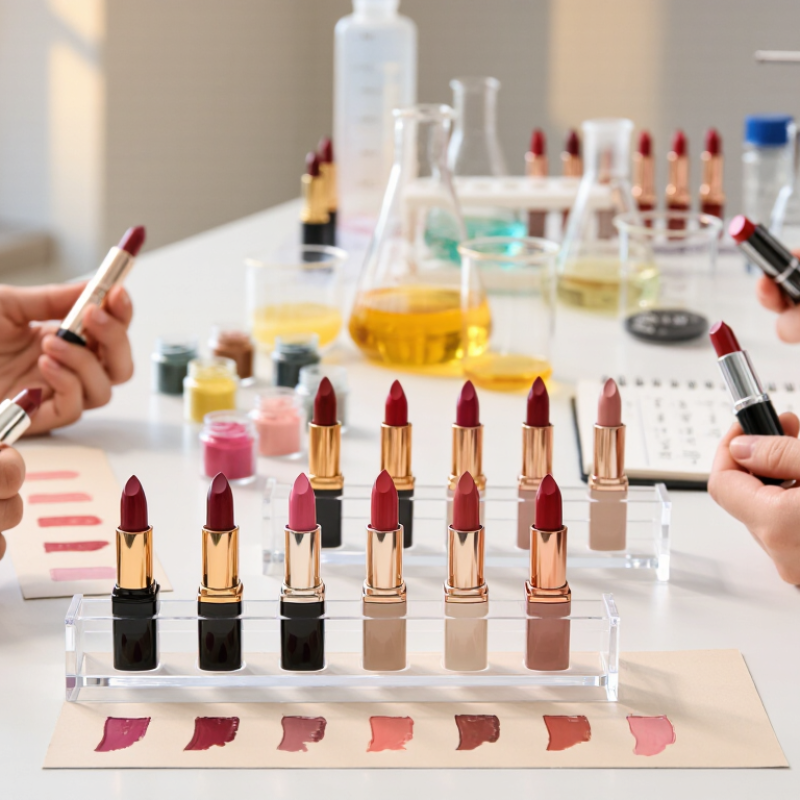
Understanding a matte lipstick supplier starts with its product range, not its catalogue size. A serious supplier should offer classic, liquid, velvet, and soft-matte formulas. Each texture behaves differently on lips and during filling. Grand View Research valued the global lipstick market at approximately USD 11.5 billion in 2023, showing strong demand but also intense competition. A wide range alone proves little.
Review shade systems, pigment consistency, wear tests, and packaging compatibility. Ask for batch samples from different production dates. Check whether the formula remains smooth after several hours, especially around the inner lip. It should not crack like dry paint. Suppliers should provide ingredient records, stability data, microbiological testing, and manufacturing quality documents. These details support reliable purchasing and safer market entry.
Product breadth must match your sales channel. A small online collection may need twelve focused shades, while a professional retailer may require deeper undertones and refill options. Mordor Intelligence projects continued growth in the global lipstick market through the decade, but forecasts can shift. I have seen buyers overvalue fashionable colors and underestimate applicator quality. That mistake is expensive. Ask about minimum order quantities, sample lead times, customization limits, and defect handling before choosing a partner. Supplier communication matters. Sometimes, the best range is the one that can be reproduced consistently.
How to Choose the Best Matte Lipstick Supplier? - Understanding Matte Lipstick Suppliers and Their Product Range
Anonymous Supplier Evaluation Matrix — Typical Industry Ranges | Supplier Model | Typical Product Range | Typical MOQ | Typical Sample Lead Time | Typical Bulk Lead Time | Customization Level | Best Suited For |
| Stock Formula Supplier | Standard matte bullet lipsticks, liquid matte lipsticks, lip liners | Usually 100–1,000 units per shade or SKU | 3–10 business days | 15–35 business days | Low to medium; shade selection and packaging changes are commonly available | Small brands, test launches, and limited collections |
| Private-Label Supplier | Pre-developed matte formulas with customizable shades, labels, cartons, and finishes | Usually 500–3,000 units per SKU | 5–15 business days | 30–60 business days | Medium to high; color matching and artwork support are often offered | Growing brands seeking a faster route to market |
| Custom Formulation Manufacturer | Bespoke bullet, cream, powder-matte, liquid, transfer-resistant, and long-wear formulas | Usually 2,000–10,000 units per SKU | 2–8 weeks, including laboratory development | 60–120 business days | High; texture, coverage, payoff, wear time, and ingredient profile can be developed | Established brands requiring product differentiation |
| Natural or Vegan-Focused Supplier | Plant-based matte formulas, mineral pigments, vegan bullet lipsticks, and botanical lip products | Usually 1,000–5,000 units per SKU | 1–4 weeks | 45–90 business days | Medium to high; ingredient restrictions and certification requirements may apply | Clean-beauty, vegan, and sustainability-focused product lines |
| High-Volume Contract Manufacturer | Large-scale matte lipstick programs across multiple shades and packaging formats | Usually 10,000+ units per SKU | 2–6 weeks | 75–150 business days | High; dedicated production planning and packaging engineering may be available | Retail programs and high-demand international distribution |
Key Product and Compliance Criteria for Supplier Selection | Evaluation Dimension | Recommended Requirement | Why It Matters | Verification Method |
| Texture and Application | Even application, controlled drag, comfortable after-feel, and no excessive flaking | Matte formulas must balance low shine with comfort and smooth payoff | Blind wear test on different lip conditions and skin tones |
| Coverage and Color Payoff | Consistent opacity after one or two passes, with documented shade standards | Coverage affects consumer experience, shade accuracy, and return rates | Compare laboratory drawdowns, approved master samples, and finished goods |
| Wear Performance | Performance claims should be supported by defined test conditions rather than general promises | Transfer resistance and wear time vary with food, oil, humidity, and application thickness | Request standardized wear, transfer, and stability test reports |
| Ingredient and Safety Documentation | Complete ingredient list, specifications, safety data, and applicable regulatory documents | Documentation supports regulatory review and reduces compliance risk | Review INCI list, certificates of analysis, product specifications, and safety assessments |
| Manufacturing Quality System | Documented cosmetic GMP procedures, batch traceability, and quality-control release checks | Consistent controls help reduce shade variation, filling defects, and contamination risks | Request current audit evidence and review batch records or inspection reports |
| Packaging Compatibility | Packaging must protect the formula, prevent leakage or breakage, and maintain closure integrity | Mechanical damage and formula interaction can occur during transport and storage | Conduct compatibility, torque, drop, vibration, and temperature-cycle tests |
| Shelf-Life and Stability | Stability data should support the proposed shelf life and storage conditions | Heat, light, and time may affect color, odor, texture, and microbial quality | Review accelerated and real-time stability results where available |
Note: MOQ and lead-time figures are typical planning ranges for cosmetic manufacturing and can vary by formula, shade count, packaging complexity, testing requirements, order volume, and destination market. Confirm all commercial, regulatory, and quality details directly with the selected supplier.
Comparing Pricing, Minimum Orders, Samples, and Lead Times
Choosing the best matte lipstick supplier requires more than comparing the lowest quoted price. A professional review should examine the full cost per unit, including packaging, color matching, testing, and shipping. A supplier offering $0.80 per unit may become expensive after artwork and setup fees. Ask for a detailed quotation with every charge listed clearly.
Minimum order quantities can affect cash flow and product risk. A small trial order is useful for testing demand, texture, shade consistency, and packaging quality. However, lower quantities may increase the unit price. Request samples from the same production line whenever possible. A laboratory sample can feel excellent, while bulk production may show slight differences. I once trusted an attractive sample too quickly. That was a mistake.
Lead time also deserves careful attention. Confirm the schedule for sample approval, raw material preparation, production, inspection, and delivery. A realistic supplier should explain possible delays instead of promising an impossible deadline. Ask whether the quoted lead time begins after payment, artwork approval, or final sample confirmation. These details matter. Keep written records of specifications and approvals. A reliable supplier should provide batch information and respond with clear updates. Still, communication alone is not enough. Review production records, quality procedures, and previous export experience before committing to a large order. Compare at least three suppliers using the same questions, because vague quotations can make an average offer look cheaper.
Verifying Communication, Customization, and Long-Term Reliability
How to Choose the Best Matte Lipstick Supplier?
A reliable supplier communicates before problems become expensive. McKinsey reports that 71% of consumers expect personalized interactions, making responsive cooperation commercially important. Ask how quickly the supplier answers technical questions. Request clear details on pigments, waxes, finish, packaging, and production limits. Vague replies are warning signs. So are delayed samples.
Customization needs evidence, not attractive promises. Discuss shade matching under natural and artificial light. Check the formula on dry, normal, and oily lips. A matte lipstick may look perfect in a sample room, then feel tight after two hours. I once treated a polished sample as proof of quality. That assumption was wrong. Require documented revisions, stability testing, batch records, and agreed approval steps. According to Grand View Research, the global lipstick market was valued at approximately USD 12.6 billion in 2022, with continued growth forecast through 2030. Competition will reward suppliers that improve details consistently.
Long-term reliability appears in ordinary moments. Can the supplier maintain shade consistency after several production cycles? Can it explain minimum order quantities, lead times, and corrective actions without avoiding specifics? NIQ’s 2024 State of Beauty coverage highlights consumers’ growing expectations for product performance and value. Therefore, test reorders, not only first orders. Keep written specifications and compare retained samples. Trust, however, should remain conditional. Verify it repeatedly.
How to Choose the Best Matte Lipstick Supplier?
Supplier verification priorities: communication, customization, and long-term reliability
The evaluation index measures how strongly each supplier-selection factor supports a dependable matte lipstick partnership. Communication speed, customization capability, quality consistency, compliance documentation, delivery reliability, and after-sales support should all be verified before signing a long-term agreement.


 House of Worship
 Transportation
 Trade shows led display
 retail
 Creative Led Solutions
 Hospitality
 Higher Education
 Corporate LED