What is an Industrial Panel PC and How Does It Work?
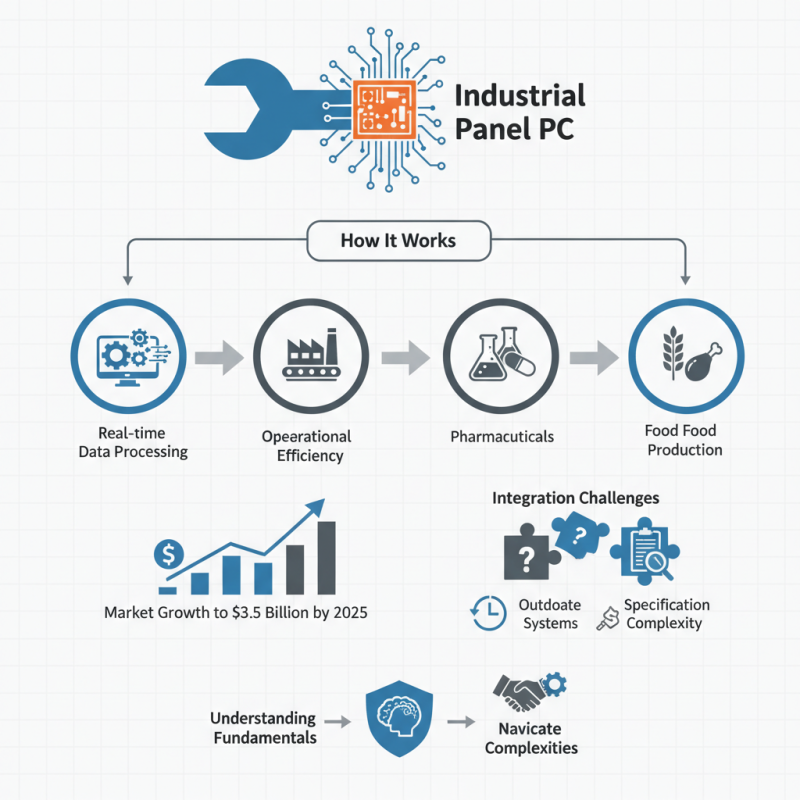
Industrial Panel PCs are revolutionizing the manufacturing sector. These robust devices provide essential features for modern automation. According to a report by MarketsandMarkets, the Industrial Panel PC market is expected to reach $3.5 billion by 2025, driven by increased demand for process automation.
Experts highlight the significance of this technology. John Smith, a renowned authority in industrial computing, states, "Industrial Panel PCs enhance the efficiency of operations through real-time data processing." This makes them vital for industries like automotive, pharmaceuticals, and food production.
However, challenges remain. The rapid evolution of technology poses integration issues. Many companies struggle to keep their systems updated. Additionally, choosing the right specification can be overwhelming. Understanding the fundamental aspects of Industrial Panel PCs can help manufacturers navigate these complexities effectively.
Definition and Key Features of Industrial Panel PCs
Industrial panel PCs are specialized computers designed for harsh environments. They combine computing power with a display screen, often featuring touchscreen capabilities. This integration allows operators to control machinery directly from the panel, which enhances efficiency. These devices are built to withstand conditions like dust, moisture, and extreme temperatures.
Key features include robust housing and a fanless design. This makes them durable and reliable for continuous operation. Many models use industrial-grade components, which ensure longevity. Unlike standard PCs, industrial panel PCs often support multiple inputs, such as USB and Ethernet. Their flexibility allows them to connect with various sensors and devices on the factory floor.
Despite their advantages, industrial panel PCs are not without challenges. Their initial cost can be high. Maintenance may also require specialized knowledge, limiting accessibility. It’s important to consider these aspects when deciding on an industrial panel PC for specific applications. Balancing performance and cost is crucial for effective investment.
Components of an Industrial Panel PC and Their Functions
An Industrial Panel PC is a robust computing device designed for demanding environments. It typically consists of several crucial components that enable its functionality and durability. A central piece is the motherboard, which houses the CPU and RAM. This is where processing takes place. Advanced cooling systems often accompany these components, ensuring efficiency in high temperatures.
Display screens on Industrial Panel PCs are usually touch-sensitive. These screens allow operators to interact with the system easily. The outer casing is usually made of rugged materials, providing protection against dust and water. Many units also include ports for connectivity. These ports support various peripherals, enhancing the machine's usability in different applications.
Power supply units in these devices are often less efficient than expected. Reliability can vary based on the environment. Mid-range components may not perform well under extreme conditions. Regular maintenance is essential but often overlooked. Without it, performance can degrade over time. This reality invites reflection on the importance of consistent upkeep for optimal efficiency.
Working Principles of Industrial Panel PCs in Industrial Settings
Industrial Panel PCs represent a significant advancement in technology for industrial environments. They integrate computing and display functions, allowing for better interaction with machinery. These devices are often designed to withstand harsh conditions, like high temperatures and dust. According to a recent market report, the demand for Industrial Panel PCs is projected to grow at a compound annual growth rate (CAGR) of 6.5% from 2021 to 2026.
The working principles of these devices involve touch-sensitive displays and powerful computing hardware. They run specialized software that controls machinery and monitors processes. Data collected in real-time aids in decision-making. Yet, despite the advantages, there are pitfalls. Many manufacturers struggle with integration issues. Incompatibility with existing systems can lead to disruptions. Moreover, training staff to use these devices can introduce inefficiencies.
Furthermore, a study indicated that almost 30% of implemented systems face functionality challenges due to improper setup or deployment. Industrial Panel PCs can enhance productivity once properly integrated. However, they require careful planning and ongoing support to maximize their potential. Continuous evaluation is essential to adapt to changing industrial needs.
Performance Comparison of Industrial Panel PCs
Applications of Industrial Panel PCs Across Various Industries
Industrial Panel PCs have found versatile applications across numerous sectors. In manufacturing, they control processes and monitor machinery. These systems provide real-time data, enhancing efficiency. For example, in an assembly line, a Panel PC can display instructions and track production rates. This immediate access to information helps operators make quick decisions.
In the healthcare industry, Panel PCs support patient management and medical records. They can be found at nurses' stations, improving workflow. A challenge here involves ensuring data security while maintaining user accessibility. In the hospitality sector, these devices act as interactive kiosks. Guests can check in, find local attractions, or order room service. The user interface must be intuitive, but sometimes it falls short of expectations. This can frustrate customers.
Logistics also benefits from Industrial Panel PCs for inventory tracking and shipment management. Workers can scan barcodes and update stock levels in real-time. However, the reliability of touch screens in harsh conditions is a concern. These environments can expose devices to dust and temperature variations. Future development should aim to improve durability and usability.
Advantages of Using Industrial Panel PCs Over Traditional Computers
Industrial Panel PCs present significant advantages over traditional computers in various applications. These devices are designed specifically for demanding environments in manufacturing, logistics, and automation. According to a report from the International Society of Automation, the market for industrial PCs is projected to grow by over 12% annually. This increase reflects their adaptability and performance in environments that ordinary PCs may not withstand.
One major advantage of Industrial Panel PCs is their durability. They feature rugged designs that resist dust, moisture, and temperature extremes. Many models can operate in temperatures as high as 70 degrees Celsius. Traditional computers often lack this level of robustness, which leads to higher failure rates in industrial settings. A study from IndustryWeek found that downtime caused by equipment failure can cost businesses up to $260,000 per hour. Hence, the reliability of Industrial Panel PCs can vastly reduce these costs and improve operational efficiency.
Moreover, these PCs often come with touchscreens optimized for industrial use. Operators can interact with machinery easily. This facilitates faster decision-making. However, the initial investment in these machines can be steep. Organizations must weigh the upfront costs against potential long-term savings. Balancing cost and benefits may seem challenging but is essential. With the right evaluation, Industrial Panel PCs can transform productivity in various sectors.


 House of Worship
 Transportation
 Trade shows led display
 retail
 Creative Led Solutions
 Hospitality
 Higher Education
 Corporate LED