China Top 10 PCB Board Manufacturers for Global Buyers
China’s Pcb Board manufacturing sector has become a major sourcing option for global electronics companies. Its strength goes beyond competitive pricing. Many Chinese manufacturers now support high-density interconnects, rigid-flex designs, multilayer boards, and rapid prototyping.
The real question is reliability.
This guide introduces ten leading China-based Pcb Board manufacturers for international buyers. The selection considers production capacity, engineering support, quality systems, material control, export experience, and delivery performance. It also considers how clearly each supplier communicates technical limits. That detail matters. A polished website cannot replace stable impedance, clean solder masks, or consistent copper thickness.
Happy Holden, a respected PCB industry author and former technologist, has described the circuit board as “the platform on which electronic products are built.” His observation remains practical today. A Pcb Board affects signal integrity, thermal performance, assembly yield, and product lifespan. It is not merely a flat green component carrier.
This overview is designed for engineers, procurement teams, and original equipment manufacturers comparing suppliers across borders. It highlights manufacturers with different strengths, including automotive-grade production, flexible circuits, quick-turn services, and complex multilayer fabrication. Certifications will be reviewed, but certification alone is not enough. Factory audits, sample testing, and direct technical discussions still matter.
No ranking can fit every project.
A supplier suitable for a wearable device may not meet aerospace documentation needs. Some companies also appear stronger in marketing than in long-term delivery consistency. That possibility deserves attention. Buyers should verify current capabilities, request recent quality records, and test production samples before making a final decision.
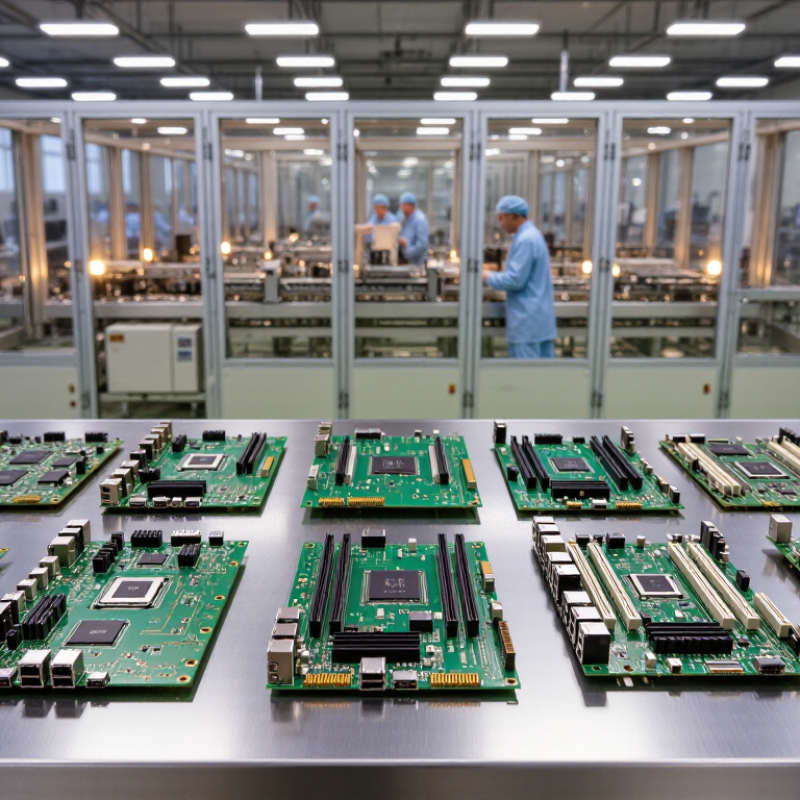
What Defines a Leading PCB Manufacturer in China
China Top 10 PCB Board Manufacturers for Global Buyers
What Defines a Leading PCB Manufacturer in China
A leading PCB manufacturer is defined by controlled processes, not impressive promises. Global buyers should examine layer alignment, copper thickness, impedance records, and drill accuracy. These details affect whether a board performs reliably inside a compact device. Factory experience matters when engineers explain failures with evidence, not vague assurances.
Quality begins with traceable materials and disciplined inspection. Ask how laminate batches are recorded, how solder mask defects are screened, and whether electrical tests cover every required net. A capable manufacturer should provide test reports, capability limits, and corrective-action records. Clear answers build trust. Silence does not.
Production visibility is equally important. Buyers need realistic lead times, stable engineering communication, and secure design-file handling. A strong supplier can review Gerber data, identify manufacturing risks, and suggest practical changes before production. That review may prevent thin annular rings, crowded routing, or costly rework. Still, no factory is perfect. Experienced teams can miss tolerance issues under urgent schedules. The honest response is documented correction, root-cause analysis, and measurable prevention.
Environmental controls and worker safety also reveal operational maturity.
Responsible facilities manage chemicals, waste, and ventilation according to applicable regulations. Certifications can support credibility, but they should not replace direct questions and sample evaluation. A useful audit includes factory visits, pilot orders, cross-section checks, and communication tests. Sometimes the best decision comes from a modest trial, not a polished presentation.
Key Manufacturing Capabilities and PCB Product Categories
China’s leading PCB manufacturers serve global buyers with varied production capabilities. Standard single-sided and double-sided boards support meters, controls, lighting, and consumer devices. Multilayer boards handle dense routing in industrial equipment and communication systems. No factory fits every project.
Experienced suppliers also produce high-density interconnect boards with microvias, fine lines, and controlled-depth drilling. Rigid-flex and flexible circuits suit cameras, medical instruments, and compact wearable devices. Metal-core boards help manage heat in power lighting and automotive electronics. High-frequency boards use low-loss materials for antennas and signal-sensitive applications.
Material selection requires practical discussion. FR-4 remains versatile, while PTFE-based and other specialized laminates support demanding signal environments. Capabilities may include impedance control, via-in-pad processing, surface finishes, and automated optical inspection. Electrical testing, X-ray review, and traceable material records strengthen reliability. Ask for sample data.
Manufacturing quality can still vary between identical specifications. A factory may promise tight tolerances but struggle with unusual stackups or small production runs. Buyers should review capability tables, inspection reports, certifications, and engineering responses before ordering. Small details matter: copper thickness, solder mask alignment, edge plating, and packaging moisture control. My experience suggests that communication often decides whether a technically good design reaches production smoothly.
Profiles of China’s Top PCB Board Manufacturers
China Top 10 PCB Board Manufacturers for Global Buyers
Profiles of China’s Top PCB Board Manufacturers
China remains a major PCB production base, supported by dense supply chains, skilled engineers, and large-scale fabrication capacity. Prismark reported that global PCB industry revenue reached about US$83.5 billion in 2023. Asia accounted for most production, making Chinese suppliers important for international sourcing teams.
The leading manufacturers usually specialize in different segments. Some focus on high-layer industrial boards, while others produce rigid-flex, HDI, or high-frequency circuits. Strong candidates typically show ISO 9001, IATF 16949, or IPC-related process controls. Their facilities may include automated optical inspection, laser drilling, impedance testing, and environmental reliability laboratories. A factory profile should also explain monthly capacity, minimum order quantities, copper thickness, and typical delivery times. Marketing language alone is not enough.
Tips: Ask for a capability table and recent test evidence. Confirm whether production occurs in-house or through subcontractors. IPC data highlights the importance of process consistency, traceability, and supplier quality controls. These details can matter more than a low quotation. A cheaper board may require more engineering changes later. I have found that sample evaluation often reveals problems hidden by polished presentations. Buyers should inspect solder mask alignment, hole-wall quality, surface finish, and packaging protection. Certifications help, but they do not replace a controlled pilot order, clear drawings, and documented corrective actions.
China PCB Industry Output Value
Annual estimated production value of the mainland China printed circuit board industry, shown in USD billions. The figures are rounded industry-level estimates and do not represent any individual company or brand.
Source note: Rounded estimates compiled from publicly reported Prismark industry data and market reports covering China PCB production value.
Quality Standards, Certifications, and Production Reliability
For global buyers comparing China’s top 10 PCB manufacturers, certification is only the starting point.
ISO 9001 supports documented quality control, while ISO 14001 shows environmental management. Automotive projects may require IATF 16949, and medical applications often need ISO 13485. The 2023 ISO Survey recorded more than 1.26 million ISO 9001 certificates worldwide. That scale shows its value, but not every certificate reflects equal production discipline.
Reliable factories connect standards with visible process evidence. Ask for IPC-A-600 acceptance records, UL recognition, impedance test results, and microsection reports. A strong supplier should trace each panel to laminate batches, operators, equipment, and inspection images. Look for automated optical inspection, solder-mask checks, and electrical testing after routing. Grand View Research estimated the global PCB market at about USD 89.7 billion in 2023, with continued growth through 2030. More demand can pressure delivery schedules. Reliability may weaken quietly.
Tips: Request a recent third-party audit, not a brochure. Review sample certificates and verify their scope, expiry date, and manufacturing address. Ask how nonconforming boards are isolated. Also check whether corrective actions receive documented root-cause analysis. A factory promising zero defects deserves careful questioning. That claim is convenient, but unrealistic. Pilot runs, capability studies, and agreed acceptance criteria reveal more than polished presentations.


 House of Worship
 Transportation
 Trade shows led display
 retail
 Creative Led Solutions
 Hospitality
 Higher Education
 Corporate LED