Communicate worship schedules and sermon messages while engaging your congregation with visual technology.
View More
LED displays in transportation settings, such as airports, train stations, and bus terminals, serve as dynamic platforms for real-time information, advertising, and wayfinding, enhancing passenger experience with clear, up-to-date travel details and announcements.
View More
Differentiate yourself from the competition by incorporating a digital experience in your booth with our trade show LED displays.
View More
Communicate your brand’s message, stand out from the competition and engage your target market with LED digital signage.
View More
We offer creative solutions at cost-effective rates. You will be able to deliver your sermons more effectively and engage your congregation through one-of-a-kind lyric video walls and house of worship LED displays.
View More
Enhance ambiance, display interactive directories and wayfinding displays, and promote amenities and events to elevate the guest experience.
View More
Incorporate digital displays to enhance your students’ learning experience and market to prospective students and donors.
View More
Transform your corporate spaces with PixelFLEX LED video displays. Enhance communication, elevate branding, and create dynamic environments.
View MoreGlobal vehicle production makes Auto Shaft sourcing a high-stakes decision, not a catalog exercise. OICA reported 93.5 million motor vehicles produced worldwide in 2023. The International Energy Agency’s Global EV Outlook 2024 recorded nearly 14 million electric-car sales that year. These figures point to scale and change. Both matter.
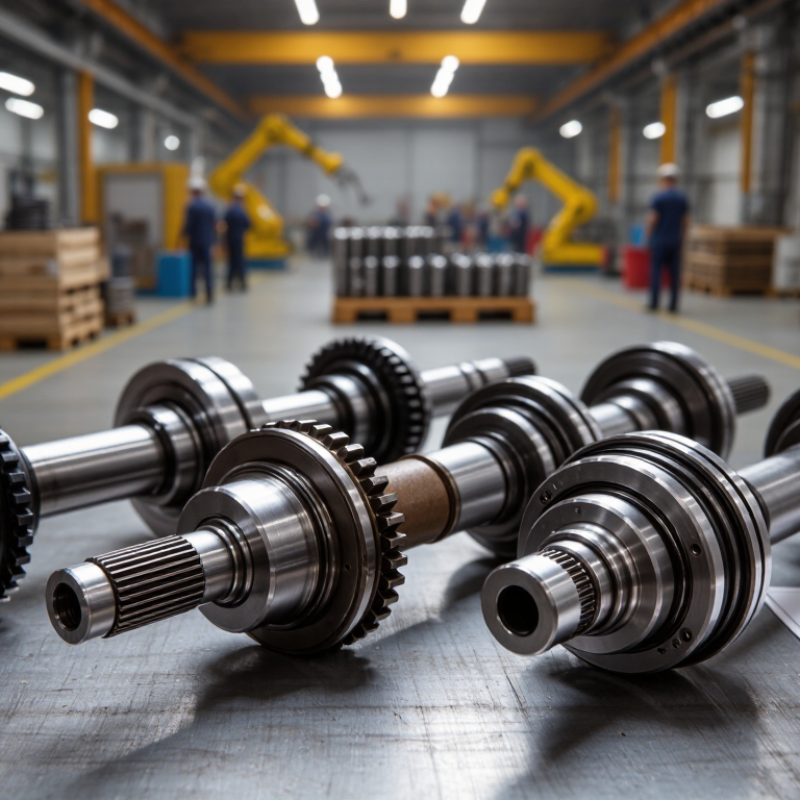
A shaft may look like a simple steel cylinder on a drawing. In service, it must transmit torque, withstand fatigue, and meet tight runout and balance limits. Small errors can become vibration, noise, or premature wear. W. Edwards Deming’s principle, “Quality is everyone’s responsibility,” is especially relevant here. Supplier quality depends on design control, heat treatment, machining, inspection, and traceability working together. It is not only a final inspection issue.
This guide to the Top 10 Auto Shaft Manufacturers for Global Buyers focuses on evidence buyers can compare: process capability, material options, testing, certifications, lead times, and regional support. Communication matters, too. A sample can pass inspection while production parts drift out of tolerance. Ask for inspection records, fatigue-test methods, and clear tolerances. Then check whether the factory can repeat them at production volume. Rankings have limits, too. A strong supplier for a passenger-car driveline may not suit a commercial vehicle or an electric-axle program. The shortlist should start a technical review, not replace one. In sourcing, fit is specific. Sometimes, inconveniently, the right answer is no.
An automotive shaft transfers rotational force between components, helping wheels or other systems receive power. In a rear-wheel-drive vehicle, a propeller shaft carries torque from the transmission to the differential. Half-shafts then connect the differential to the wheels. The exact arrangement depends on the vehicle’s drivetrain and packaging.
Small details matter. A shaft must handle changing loads, vibration, and, in many designs, movement as the suspension travels. Universal or constant-velocity joints allow connected parts to operate at changing angles. Bearings support rotation, while careful balancing helps limit vibration at speed. A slight imbalance can become noticeable through the floor or steering wheel.
Material choice, dimensions, heat treatment, and surface finish all influence performance and service life. Buyers comparing shaft makers can ask how parts are tested for fatigue, runout, and dimensional consistency. Test results are useful, but they do not replace matching a shaft to the vehicle’s actual load and operating conditions. Specifications can still miss real-world variation. That deserves a second look.
A credible ranking of auto shaft manufacturers should begin with measurable production capability, not polished catalog claims. Buyers can compare dimensional control, material documentation, heat-treatment consistency, and the ability to hold spline geometry across repeat orders. Small deviations matter: excess runout or uneven hardness can shorten service life and complicate assembly.
Testing deserves close attention. Strong suppliers can explain how they inspect critical dimensions, verify fatigue performance, and trace batches from incoming material to finished parts. Ask for sample inspection records and clarify which tests apply to the specific shaft design. No score is perfect. Published certificates help, but they do not replace evidence from actual production.
A useful ranking should also weigh delivery reliability, engineering support, and communication during design changes. Compare quoted lead times with demonstrated capacity, and ask how suppliers handle tooling adjustments or rejected batches. For global buyers, packaging and shipment planning can affect shaft condition on arrival. These factors are harder to score than tolerances, and rankings may understate them. Still, clear criteria make comparisons more dependable.
For global buyers comparing auto shaft manufacturers, production scale matters, but process control matters more. OICA reported 93.5 million motor vehicles produced worldwide in 2023, underscoring the need for dependable supply across regions. The International Energy Agency reported nearly 14 million electric-car sales that year. That shift makes shaft evaluation more specific: buyers should ask about torque requirements, spline accuracy, fatigue testing, and heat-treatment consistency. Small deviations can cause vibration or premature wear.
A credible top-ten comparison should rely on verifiable evidence, not catalog claims. Request dimensional inspection records, material certificates, production-capacity data, and traceability from steel batch to finished shaft. Ask how suppliers control runout and inspect splines after machining. Look for documented corrective-action procedures. Useful, but not enough. OICA and IEA figures describe vehicle demand, not shaft quality; they cannot rank factories by themselves. Buyers should also compare sample results, delivery performance, and communication across time zones. One detail is easy to overlook: a polished sample may not represent routine production. Independent audits and repeat orders offer stronger evidence.
Product-category comparison for evaluating automotive shaft suppliers. Materials and processes listed are common examples; specifications vary by design and application.
| No. | Shaft Category | Vehicle System | Primary Function | Common Material Examples | Typical Manufacturing Processes | Buyer Checks |
|---|---|---|---|---|---|---|
| 1 | Drive axle shaft | Driveline | Transfers torque from the differential to a driven wheel. | Alloy steel; some designs use other steels or lightweight alloys. | Forging or bar machining, heat treatment, spline cutting, grinding. | Torque capacity, fatigue performance, spline and runout tolerances. |
| 2 | Propeller shaft | Rear-wheel or four-wheel drive | Carries rotational power between the transmission or transfer case and the axle. | Steel tubing; aluminum or composite designs are also used in some vehicles. | Tube forming, welding, balancing, and joint assembly. | Dynamic balance, critical speed, joint compatibility, corrosion protection. |
| 3 | Constant-velocity axle shaft | Front-wheel drive and independent suspension | Transmits torque while accommodating wheel steering and suspension movement. | Hardenable alloy steel is common for shafts and joint components. | Forging, spline machining, heat treatment, joint assembly. | Joint articulation, plunge range, boot durability, noise and vibration. |
| 4 | Transmission input shaft | Manual or automatic transmission | Receives rotational power from the engine or motor and feeds it into the transmission. | Alloy or carbon steel, selected according to load and heat-treatment requirements. | Turning, spline or gear machining, heat treatment, precision grinding. | Bearing-seat accuracy, spline fit, hardness, concentricity. |
| 5 | Transmission output shaft | Transmission and driveline | Delivers transmission output to the final drive or connected driveline. | Carbon or alloy steel is commonly used. | Turning, spline cutting, heat treatment, grinding, inspection. | Torque rating, sealing surfaces, spline dimensions, dimensional inspection. |
| 6 | Transmission countershaft | Gearbox | Supports gear sets and transfers rotation within certain transmission designs. | Hardenable alloy steel is used in many gearshaft applications. | Gear cutting or shaping, heat treatment, grinding, gear inspection. | Gear accuracy, tooth hardness, bearing fits, noise and durability testing. |
| 7 | Steering intermediate shaft | Steering system | Connects steering components and transmits steering input through the column assembly. | Steel is common; designs may include collapsible or telescoping sections. | Tube forming, spline machining, joining, corrosion-resistant finishing. | Telescoping fit, joint play, collapse behavior, steering torque capacity. |
| 8 | Camshaft | Internal-combustion engine valvetrain | Controls valve timing and lift through its cam profiles. | Cast iron or steel, depending on engine design and production method. | Casting or forging, cam lobe machining, heat treatment, profile grinding. | Lobe profile accuracy, surface hardness, straightness, wear performance. |
| 9 | Crankshaft | Internal-combustion engine | Converts piston and connecting-rod motion into rotational output. | Forged steel or cast iron, depending on engine design and required performance. | Forging or casting, journal machining, heat treatment, balancing, grinding. | Journal geometry, fatigue strength, balance, surface finish, crack inspection. |
| 10 | Electric traction motor rotor shaft | Hybrid and battery-electric powertrain | Supports the rotor and transfers motor torque to the reduction gear or driveline. | Steel is common; material and surface requirements depend on motor architecture. | Precision turning, grinding, balancing, and feature machining. | High-speed balance, fit and concentricity, fatigue life, process traceability. |
A useful comparison of auto shaft manufacturers starts with product coverage: half-shafts, propeller shafts, steering shafts, and application-specific assemblies. Check whether each supplier controls forging, precision machining, heat treatment, balancing, and final inspection. These steps affect runout, fatigue life, and vibration—details that become visible during a road test, not on a catalog page. Ask for dimensional reports, material traceability, and repeatability data from production runs. Claims alone are thin evidence.
Quality requirements are also shifting with vehicle design. The International Energy Agency reported that electric car sales exceeded 17 million in 2024, accounting for more than one-fifth of global car sales. That figure does not prove higher shaft demand, but it highlights the need to assess torque, speed, mass, and noise requirements across different platforms. Compare suppliers’ testing capacity against the actual duty cycle, including thermal and fatigue testing where relevant. Look for documented control plans and clear change-management procedures. A polished factory tour can still leave gaps. I would also question any comparison that ranks suppliers using price alone; low unit cost may conceal tooling limits or inconsistent process control.
Top 10 Auto Shaft Manufacturers for Global Buyers
Selecting an auto shaft supplier requires more than comparing unit prices. Buyers should verify dimensional capability, material consistency, fatigue testing, and batch traceability. Ask for measured runout and hardness results from real production lots, not only polished sample reports. Visit the plant when possible. Watch how operators manage tool wear and segregate nonconforming parts.
Long-term support matters because sourcing disruptions can quickly affect production schedules. McKinsey’s 2020 analysis estimated that companies face supply-chain disruptions lasting a month or longer about every 3.7 years. The International Energy Agency reported nearly 14 million electric-car sales in 2023, around 18% of global car sales. Shifting vehicle designs can change shaft specifications and demand. Suppliers should explain how they handle engineering changes, capacity planning, and replacement tooling. That gap deserves attention.
Compare suppliers using documented process controls, corrective-action records, and clear escalation contacts. Ask how quickly they can contain a quality issue and provide replacement stock. Check whether inspection equipment is calibrated and whether production data can be traced to specific batches. No scorecard captures everything. A supplier may pass an audit yet struggle with communication across time zones. Test responsiveness with a small technical query before committing to a long-term program.