China Top Inverter Voltage Stabilizer Suppliers?
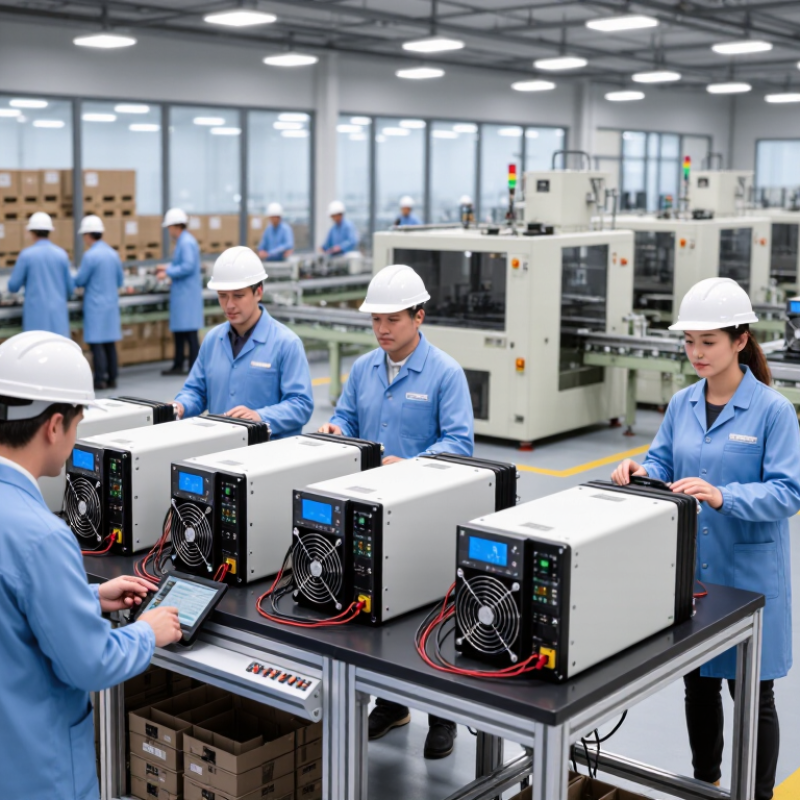
China has become a major sourcing market for power protection equipment, including the Inverter Voltage Stabilizer. However, choosing a reliable supplier requires more than comparing online prices or attractive product photos. Buyers should examine manufacturing experience, voltage accuracy, response time, thermal protection, and after-sales support. A supplier may offer impressive specifications, yet practical performance can differ under unstable grids, heavy loads, or high temperatures.
This guide introduces leading Chinese suppliers and explains how to assess them with greater confidence. It considers factory capabilities, product testing, certifications, customization options, and export experience. Real evaluation should include sample testing, technical discussions, and clear documentation. Ask how the stabilizer performs when input voltage changes sharply. Check whether the cooling system remains stable after several hours of operation. Small details matter.
Field experience also shows that the lowest quotation is not always the safest choice. Some suppliers communicate quickly before payment but respond slowly when technical issues appear. That weakness deserves attention. Buyers should request test reports, warranty terms, installation guidance, and spare-parts availability before placing an order. Independent inspection can also reduce uncertainty, especially for large projects.
The supplier landscape changes continuously. Product quality may vary between factories and production batches. Therefore, this overview should support careful comparison, not replace professional verification. With a structured approach, importers, distributors, and industrial users can identify an Inverter Voltage Stabilizer supplier that balances reliability, efficiency, compliance, and long-term service.
What Is an Inverter Voltage Stabilizer?
An inverter voltage stabilizer keeps AC output steady when incoming mains voltage rises or falls. It measures the supply, converts AC power to DC, then uses an inverter to produce controlled AC. Many designs work without a battery, so they regulate voltage but do not necessarily provide backup during an outage. That distinction matters. A display may show a stable reading while a sensitive motor still reacts to poor frequency or waveform quality.
IEEE Std 1159-2019 classifies a voltage sag as a drop to 0.1–0.9 per unit, lasting from half a cycle to one minute. Those figures help explain why brief dips can disrupt control boards, pumps, or workshop equipment. Check the unit’s rated input range, output tolerance, capacity, and overload response against the actual load. IEC 61000-4-11 also specifies immunity tests for voltage dips and short interruptions in certain low-voltage equipment. In practice, match the stabilizer to the equipment’s starting current, not just its normal running wattage. One awkward detail: installation conditions matter too. Poor ventilation can shorten component life, even when the voltage readings look perfect.
China Top Inverter Voltage Stabilizer Suppliers? - What Is an Inverter Voltage Stabilizer?
A practical guide to voltage-stabilizing and inverter technologies, common applications, and supplier evaluation. The comparison below describes equipment categories rather than ranking or naming companies.
| Equipment or evaluation item | How it works or what to check | Typical use or practical note |
| AC voltage stabilizer | Corrects variations in AC input voltage to keep the output closer to its specified voltage. It does not necessarily provide backup power. | Used where supply voltage fluctuates and connected equipment needs a more stable AC supply. |
| Inverter | Converts DC electricity into AC electricity. An inverter by itself does not necessarily regulate a fluctuating AC mains input. | Often used with a battery or another DC source to supply AC power during an outage. |
| Inverter with voltage regulation | A product description that can refer to an inverter system with a voltage-regulation function. Confirm whether it also includes a battery charger, battery, and mains bypass. | Check the product’s wiring diagram and operating modes; terminology can vary between suppliers. |
| Servo-controlled stabilizer | Uses a motor-driven mechanism and transformer to adjust output voltage. Correction speed and accuracy depend on the design and operating conditions. | Commonly considered for equipment that needs regulated AC power; moving parts require appropriate maintenance. |
| Relay-type stabilizer | Uses relays to switch transformer taps as input voltage changes. Output correction occurs in steps rather than as a continuously variable adjustment. | Often used for general-purpose loads where stepped correction is acceptable. |
| Static stabilizer | Uses electronic power-control components rather than a motor-driven variable transformer. Response, accuracy, efficiency, and overload behavior depend on the specific design. | Evaluate the stated performance against the load’s requirements instead of relying on the technology name alone. |
| Rated input and output voltage | Confirm the nominal supply voltage, allowable input-voltage range, output-voltage tolerance, and frequency stated on the datasheet. | For equipment intended for China, 220 V, 50 Hz is a common single-phase nominal supply; verify the site supply and product configuration. |
| Capacity and load type | Check the rated capacity in VA or kVA and whether the rating applies to the intended input conditions. Account for starting current and power factor. | Motors, pumps, compressors, and other inductive loads can require higher starting capacity than their normal running demand. |
| Protection and operating limits | Review overvoltage, undervoltage, overload, overtemperature, short-circuit, and bypass protections, where applicable. | Confirm which protections are included, their trip conditions, and whether the unit restarts automatically after a fault. |
| Supplier documentation | Request a datasheet, wiring diagram, test reports where relevant, installation requirements, warranty terms, and spare-parts information. | Compare suppliers using the same load profile, input range, capacity, and required certifications. |
Selection note: “Inverter” and “voltage stabilizer” describe different functions. Before purchasing, confirm whether the required product must regulate AC voltage, convert DC to AC, provide backup power, or perform more than one of these functions. Ratings and performance are model-specific and should be verified in the supplier’s technical documentation.
How Inverter Voltage Stabilizers Work
China Top Inverter Voltage Stabilizer Suppliers?
How Inverter Voltage Stabilizers Work
An inverter voltage stabilizer monitors incoming power and adjusts its output when the supply rises or falls. Many designs convert incoming AC electricity into DC, then use an inverter to produce regulated AC power. A control circuit samples the output and changes the inverter’s switching pattern to keep voltage near its target. The result is steadier.
This conversion can reduce the effect of brief fluctuations, which matter to equipment with sensitive control boards. Picture a workshop where a compressor starts and the lights dip for a moment. A properly sized stabilizer can help limit voltage changes reaching connected devices. However, it cannot correct every power problem, and performance depends on its design, capacity, and response time.
When comparing suppliers, ask for clear ratings, operating limits, and test data for the intended load. Check whether the unit supports the equipment’s starting current, not just its normal running demand. Installation conditions matter too: ventilation, cable size, and grounding affect safe operation. Specifications can look reassuring on paper; real site conditions are messier.
Key Features of China’s Leading Suppliers
China Top Inverter Voltage Stabilizer Suppliers: Key Features of China’s Leading Suppliers
China’s leading inverter voltage stabilizer suppliers increasingly serve renewable energy, factories, data rooms, and commercial buildings. The National Energy Administration reported 1,516 GW of renewable power capacity in China by the end of 2023. This expansion increases demand for stable voltage, faster correction, and reliable equipment. Strong suppliers usually offer automatic voltage regulation, low harmonic distortion, overload protection, and intelligent monitoring. Short response times matter.
Look for documented testing, not attractive brochures. IEC 60038 provides reference voltage standards, while IEC 61000 covers electromagnetic compatibility requirements. Reliable manufacturers should provide test records, calibration details, and traceable component information. ISO 9001 certification can support process control, but it does not guarantee every unit will perform perfectly. That distinction is often missed.
Thermal design reveals practical experience. A cabinet facing dust, heat, and unstable grid conditions needs ventilation control, fire-resistant wiring, and a safe bypass path. Suppliers should publish efficiency curves and operating limits, rather than one impressive efficiency number. The International Energy Agency reported that China contributed about 60% of global renewable capacity additions in 2023. Field support therefore matters, especially for remote projects. A supplier with spare-parts planning, clear warranty terms, and local engineers reduces downtime. Specifications can still disappoint. Independent acceptance testing remains wise before large-scale deployment.
How to Evaluate Supplier Quality and Reliability
China Top Inverter Voltage Stabilizer Suppliers?
How to Evaluate Supplier Quality and Reliability
A reliable supplier should prove performance, not merely display impressive specifications. Request factory test records for voltage accuracy, response time, overload behavior, efficiency, and total harmonic distortion. IEC 61000-4-30 provides a recognized framework for power-quality measurement, so test methods should be clearly documented and repeatable.
Ask for results at 25%, 50%, 75%, and 100% load. Check the output waveform after a sudden load change, not only during steady operation. Thermal testing also matters. A cabinet that performs well in a cool showroom may fail beside a dusty production line. Request component traceability, calibration records, corrective-action reports, and evidence of routine production testing. Numbers can mislead.
Reliability claims should connect with real operating data. The Uptime Institute’s 2024 Global Data Center Survey reported that 54% of respondents experienced an outage costing more than $100,000. This finding shows why supplier evaluation must include protection design, service response, and spare-parts availability. Ask how quickly engineers diagnose faults remotely and how replacement units are handled across regions. Review warranty exclusions carefully. A long warranty is weak evidence without repair statistics or failure-rate data.
An on-site acceptance test can expose hidden weaknesses. Measure output stability with your actual equipment, cable length, and load pattern. Compare the supplier’s report with independent measurements. That is not enough. Also inspect electrical clearances, cooling paths, alarm logic, and maintenance access. A transparent supplier will welcome uncomfortable questions, even when its documentation is incomplete.
This benchmark helps buyers evaluate inverter voltage stabilizer suppliers without relying on brand names. The suggested weighting emphasizes documented compliance, voltage-regulation performance, product efficiency, protection functions, reliability testing, and after-sales support. Verify technical claims through test reports, factory audits, samples, and traceable quality records.
Applications, Certifications, and Purchasing Considerations
China’s leading inverter voltage stabilizer suppliers serve factories, hospitals, data rooms, elevators, and solar installations. The International Energy Agency’s Electricity 2024 report projects global electricity demand will grow by about 3.4% annually through 2026. More connected equipment means greater sensitivity to voltage dips, surges, and harmonic distortion. In practice, a stabilizer protecting CNC equipment needs tighter regulation than one serving lighting circuits. Field conditions matter.
Ask suppliers for documented applications, not broad claims. Request test results for input range, response time, load efficiency, and overload protection. IEC 60038 helps define acceptable supply voltage levels, while IEC 61000 standards address electromagnetic compatibility. For manufacturing projects, ISO 9001 certification can indicate controlled production processes. ISO 14001 may support environmental procurement requirements. CE or RoHS documents can be relevant for export markets, but their applicability depends on the product and destination. Certification labels alone prove little.
Purchasing teams should compare continuous capacity, not only peak capacity. Motors may draw several times their rated current during startup. A 100 kVA unit can therefore be unsuitable for a heavily motor-driven load. Ask for heat-rise data, insulation class, bypass design, maintenance intervals, and spare-part availability. Independent factory audits are useful. So are witnessed load tests.
The IEA data describes rising demand, but it does not prove every site needs a stabilizer. A measured power-quality survey should guide sizing. Suppliers sometimes provide impressive efficiency figures under ideal loads. Real operating conditions may be less flattering.


 House of Worship
 Transportation
 Trade shows led display
 retail
 Creative Led Solutions
 Hospitality
 Higher Education
 Corporate LED