How to Choose the Best LED Video Wall?

Choosing the best led video wall is rarely a matter of selecting the highest resolution or largest screen. The right choice depends on viewing distance, room brightness, content type, installation space, and daily operating demands. A display that performs beautifully in a dark studio may look weak beside a sunlit storefront. Real projects often reveal this gap.

Experience matters here. Installers assess pixel pitch from the audience’s nearest position, not from a product brochure. They inspect cabinet weight, front or rear maintenance access, power distribution, and spare-module availability. A fine-pitch panel can produce sharp images, but it may increase cost without improving the audience experience. That compromise deserves honest attention.

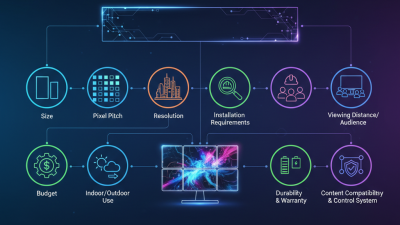
Technical evaluation should include brightness, refresh rate, grayscale performance, contrast, color consistency, viewing angle, thermal design, and control-system compatibility. Professional testing also considers calibration records, warranty terms, certifications, and the manufacturer’s service response. Reliable suppliers explain limitations instead of promising perfect performance. They provide measured data and practical recommendations.

There is no universal winner.

A strong buying decision connects specifications with real conditions. Consider a conference room with a 4K presentation feed, a retail window facing afternoon sunlight, or a control room requiring uninterrupted operation. Each environment demands a different balance. Some decisions may still require revision after installation. That is normal, and careful planning leaves room for it. This guide examines the questions, measurements, and trade-offs that help buyers choose an led video wall with greater confidence and fewer expensive surprises.

How to Choose the Best LED Video Wall?

LED Video Wall Fundamentals and Display Types

How to Choose the Best LED Video Wall?

LED Video Wall Fundamentals and Display Types

Choosing an LED video wall starts with its purpose, viewing distance, and installation environment. An LED wall uses many small light-emitting diodes to create images without a traditional projector. Pixel pitch measures the distance between diode centers. Smaller pitch usually produces sharper images at close viewing distances.

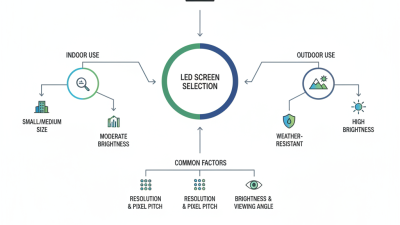
Measure viewing distance carefully. In a meeting room, fine-pitch panels can preserve readable text and facial details. In a stadium, larger-pitch panels may perform well from far away. Brightness also matters. Indoor walls need controlled luminance, while outdoor displays require stronger output and weather protection.

Different display types suit different projects. SMD panels offer flexible image performance and common service options. COB panels can provide a smoother surface and improved resistance to physical contact. Fixed-installation cabinets suit permanent venues. Rental cabinets are lighter and designed for repeated assembly. Outdoor models need sealed construction, drainage, and stable temperature control.

Do not trust one specification sheet. Ask for measured brightness, refresh rate, grayscale performance, and power consumption. High refresh rates can reduce camera banding during live production. Proper calibration keeps colors consistent across cabinets. I have seen attractive walls lose impact because one module looked slightly greener. That small flaw became obvious under white content.

Heat management deserves attention. Poor ventilation can shorten component life and raise maintenance costs. A site survey may reveal glare, weak power capacity, or difficult access behind the wall. Those details are easy to miss, and they often matter more than a glossy cabinet finish.

Define the Wall’s Purpose, Location, and Viewing Conditions

How to Choose the Best LED Video Wall?

Define the wall’s purpose before comparing specifications. A retail display needs clear product detail, while a concert wall needs motion, brightness, and impact. AVIXA’s 2024 Industry Outlook estimates global professional audiovisual revenue will exceed 300 billion dollars in 2024. That growth increases choice, but also increases confusion. Start with the viewer’s real experience.

Location changes every technical decision. Measure viewing distance, ambient light, ceiling height, and available service access. For close viewing, choose a finer pixel pitch. For distant audiences, a larger pitch may reduce unnecessary cost. Bright sunlight can require higher luminance, but excessive brightness causes glare and eye fatigue. The 2024 digital signage market analysis from Grand View Research reports an estimated market value of over 27 billion dollars in 2023. Yet market growth does not guarantee a suitable installation. I have seen walls selected for brightness alone, then criticized for poor readability. That mistake is easy to repeat.

Tips: Test sample content at the actual distance. Include skin tones, small text, and fast video. Check the wall at noon and after dark. Confirm power, heat, noise, and maintenance access. Ask for measured brightness, refresh rate, and calibration records. Also inspect viewing angles. A technically impressive wall can still feel wrong. Reconsider the plan before installation.

How to Choose the Best LED Video Wall? - Define the Wall’s Purpose, Location, and Viewing Conditions

Decision Dimension Typical Situation Recommended LED Video Wall Specification Why It Matters
Primary Purpose Corporate presentations, meeting rooms, broadcast studios, and control rooms Close viewers can see individual pixels, so a smaller pixel pitch improves text, charts, faces, and camera images. Moderate brightness helps prevent eye strain indoors.
Primary Purpose Retail advertising, shopping malls, airports, and indoor public information displays These applications usually combine medium viewing distances with strong ambient lighting. The display should remain readable without appearing excessively bright.
Primary Purpose Concerts, festivals, sports venues, stage backdrops, and rental production Longer viewing distances allow a larger pixel pitch. A high refresh rate reduces scan lines and flicker when the wall is filmed by professional cameras.
Installation Location Indoor environment with controlled lighting and no direct sunlight Indoor displays generally require less brightness than outdoor displays. Choosing the correct service method can reduce maintenance time and installation complexity.
Installation Location Outdoor environment exposed to daylight, rain, dust, or temperature changes Outdoor walls must overcome sunlight and resist water and dust. The specified temperature range should match the actual climate and installation conditions.
Viewing Distance Less than 3 meters A smaller pixel pitch produces a finer image structure and makes small text and detailed graphics more comfortable to view at short distances.
Viewing Distance Approximately 3–8 meters This range offers a practical balance between image detail, display cost, and energy consumption for many indoor applications.
Viewing Distance More than 8 meters At longer distances, viewers cannot easily distinguish smaller pixel spacing. A larger pitch can provide sufficient perceived sharpness while reducing project cost.
Content Type Small text, spreadsheets, user interfaces, or detailed product images Small details require high pixel density and accurate image processing. Uneven cabinet alignment can make fine lines and text appear distorted.
Content Type Fast motion, sports, live events, or camera-recorded content High refresh performance helps reduce flicker, motion artifacts, and scan lines, especially when the wall is viewed through broadcast or event cameras.
Color and Image Quality Professional visual presentation, photography, design, or broadcast production Higher grayscale processing and careful calibration improve shadow detail, gradients, skin tones, and consistency across the entire wall.
Viewing Angle Audiences view the screen from the front and from both sides A wide and stable viewing angle helps people at the sides see consistent images, which is important in retail spaces, auditoriums, and public venues.
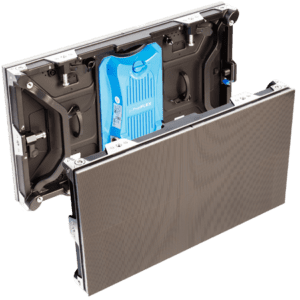
Maintenance Access The rear of the video wall is difficult or impossible to access Front access allows technicians to replace modules and components without removing the entire wall or constructing additional rear maintenance space.
Wall Size and Aspect Ratio A custom-size wall is required for architectural, branding, or stage-design reasons The physical wall size and cabinet ratio affect the final resolution, content layout, installation labor, and the amount of image cropping or scaling.
Energy and Operations The display operates for many hours each day Brightness control and efficient components can reduce electricity use and heat generation. Actual consumption depends on content, brightness, pixel pitch, and operating mode.
Reliability and Safety Permanent installation in a public or mission-critical environment Public installations need dependable operation and safe mechanical and electrical integration. Redundancy can help limit downtime when a component or signal path fails.

Compare Resolution, Pixel Pitch, Brightness, and Viewing Distance

How to Choose the Best LED Video Wall?

Resolution and pixel pitch should match the viewing distance, not personal preference. Pixel pitch is the space between individual LED pixels. A smaller pitch creates sharper images at close range. For a control room viewed from three to five meters, a fine pitch can preserve small text and detailed charts. At ten meters or more, a larger pitch may look equally clear and reduce cost. I have seen teams overspend on resolution that viewers could not notice.

Brightness must suit the installation environment. Indoor walls often need moderate brightness for comfortable viewing. Outdoor displays require stronger output to compete with sunlight. Excessive brightness can cause eye strain and wash out camera images. Viewing distance also affects perceived detail. Measure the nearest and farthest seats before choosing. Do not rely only on showroom appearance. It can mislead.

Tips: Stand at the actual viewing distance and inspect text, faces, and thin lines. Compare the wall under daytime and evening lighting. Check whether brightness can be adjusted smoothly. Ask for power, maintenance, and calibration data. A practical test is better than a confident guess. Still, site conditions change, and even a careful choice may need later adjustment.

Evaluate Size, Installation Design, Control Systems, and Connectivity

Choosing the best LED video wall starts with the viewing experience, not the screen size. Measure the farthest and nearest viewing points first. As a practical estimate, pixel pitch in millimetres should roughly match the viewing distance in metres. A 2.5-metre viewing distance may suit a 2.5 mm pitch. This is only a starting point. Fine text, camera shots, and bright lighting may require a smaller pitch. AVIXA’s 2024 Industry Outlook and Trends Analysis estimated global professional AV revenue at about US$332 billion, showing how quickly visual systems are expanding across workplaces, retail, and events.

Installation design deserves equal attention. Check wall load, ventilation, service access, ambient light, and cable paths before ordering panels. Front-service modules help in tight spaces. Rear access may reduce maintenance time in dedicated rooms. Control systems should support accurate calibration, real-time monitoring, source switching, and backup processing. A technically impressive wall can still fail when one controller becomes a single point of failure. That risk is easy to underestimate.

Tips: Create a signal map before installation. List every source, resolution, frame rate, connector, and cable length. Use fiber for long runs when copper limits become practical. Confirm HDMI, SDI, or IP compatibility with the processor, not only the display. Keep spare modules and tested configuration files onsite. A perfect design on paper may still need adjustment after the first camera test.

Assess Durability, Maintenance Needs, Energy Use, and Total Cost

How to Choose the Best LED Video Wall?

Durability should match the installation environment. Outdoor walls need weather protection, sealed cabinets, and corrosion-resistant materials. Indoor displays still face dust, heat, and accidental contact. Ask for operating temperature ranges and verified protection ratings. Do not rely on appearance alone. A rigid cabinet can still hide weak connectors or poor thermal design. Request test reports and inspect sample modules before ordering.

Maintenance affects uptime and labor costs. Front-service access can reduce repair time in tight spaces. Check whether technicians can replace modules without removing the entire cabinet. Confirm spare-part availability for several years. A low purchase price may become expensive when replacement parts are slow or proprietary. This is where many buyers underestimate risk. I would also examine cable routing, diagnostic software, and cleaning requirements. These details seem minor until a display fails before an event.

Tips: Compare power consumption at typical brightness, not only maximum output. Automatic brightness control can reduce energy use in changing light. Calculate electricity, servicing, spare modules, installation, and disposal costs together. Ask an experienced installer to measure wall access, ventilation, viewing distance, and daily operating hours. Leave room for uncertainty. Real energy use can differ from laboratory figures, especially in bright venues. A simple five-year cost sheet often reveals the more sensible choice.

Need Help?
X

Ready to Talk?

Our team is ready to connect.