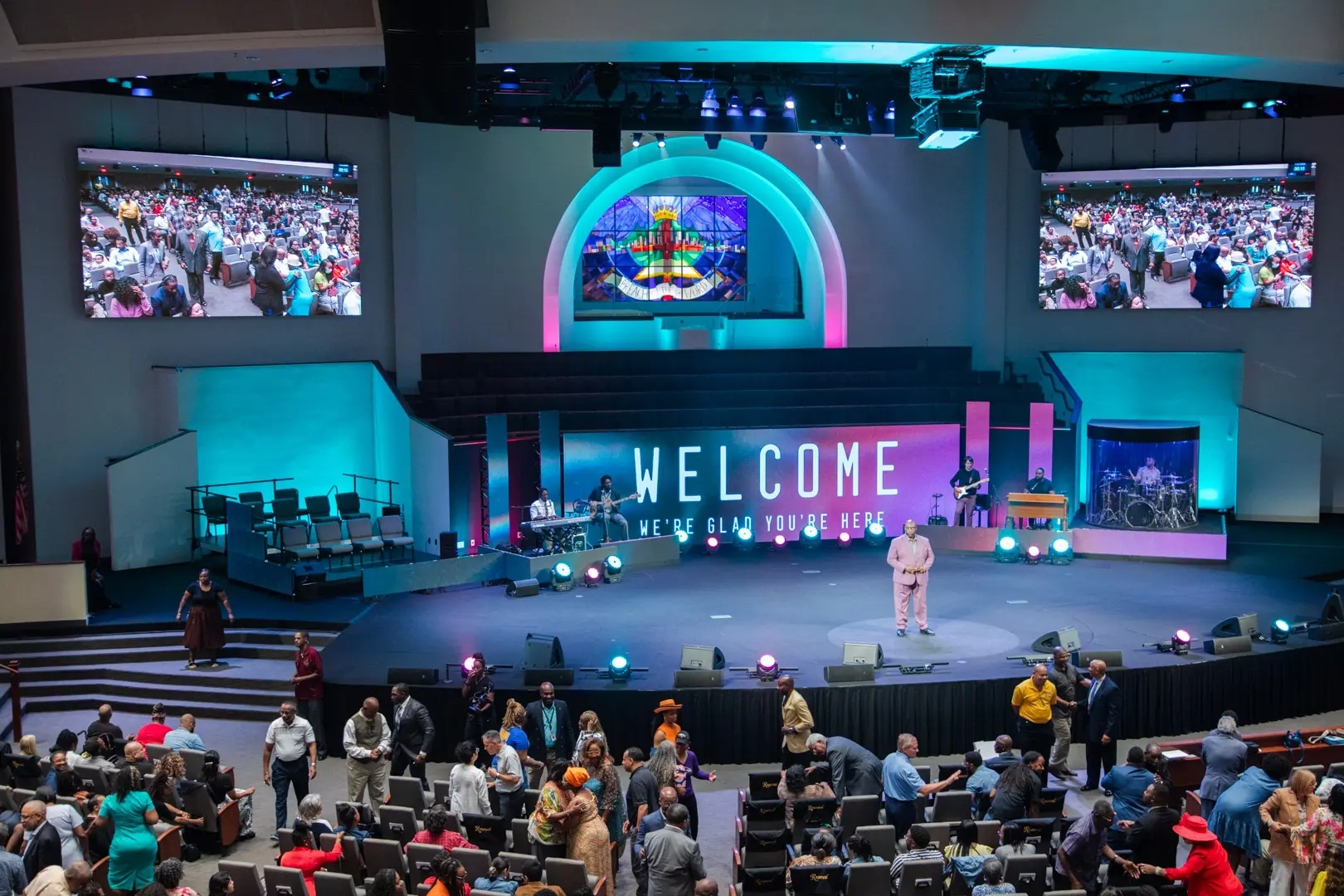
Communicate worship schedules and sermon messages while engaging your congregation with visual technology.
View More
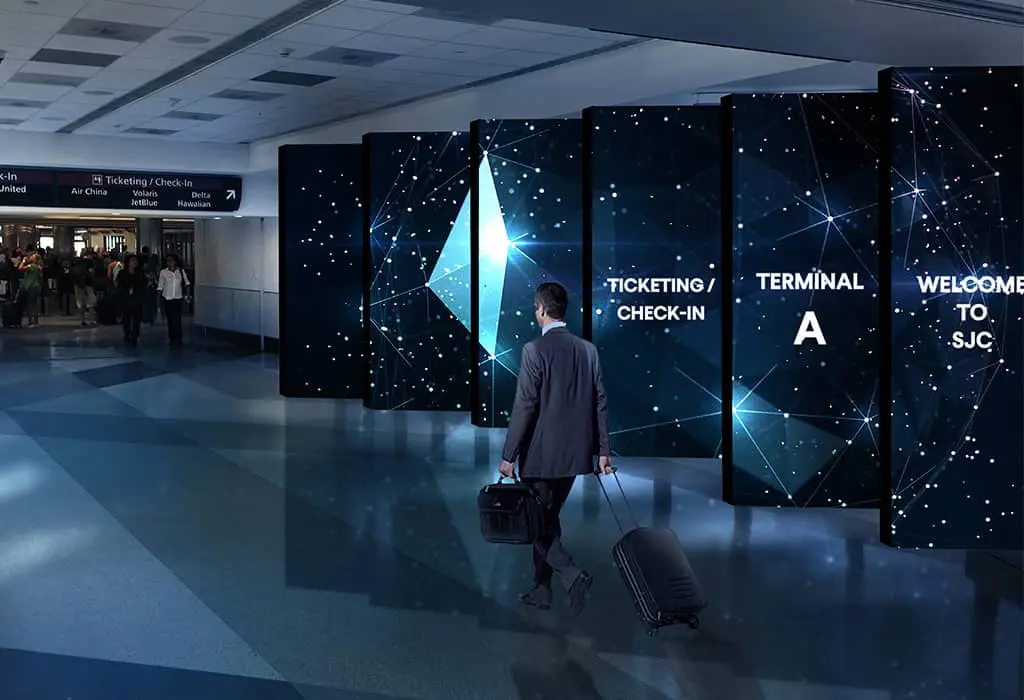
LED displays in transportation settings, such as airports, train stations, and bus terminals, serve as dynamic platforms for real-time information, advertising, and wayfinding, enhancing passenger experience with clear, up-to-date travel details and announcements.
View More
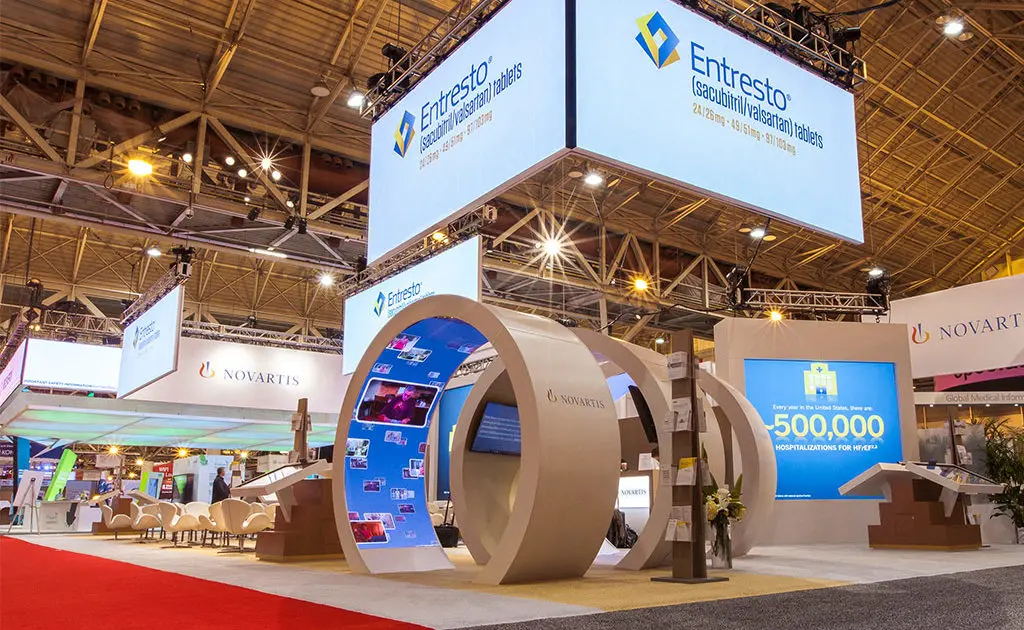
Differentiate yourself from the competition by incorporating a digital experience in your booth with our trade show LED displays.
View More
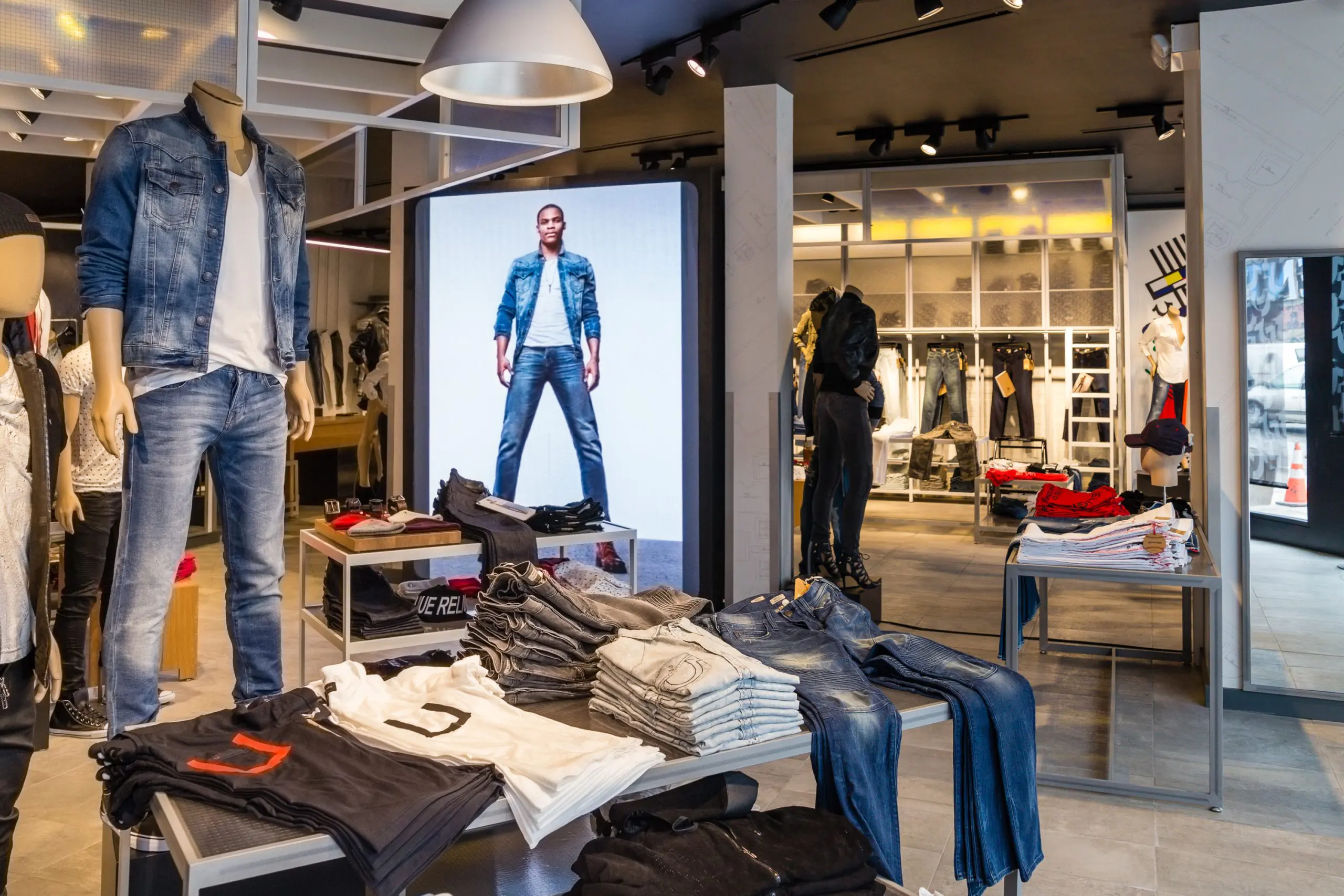
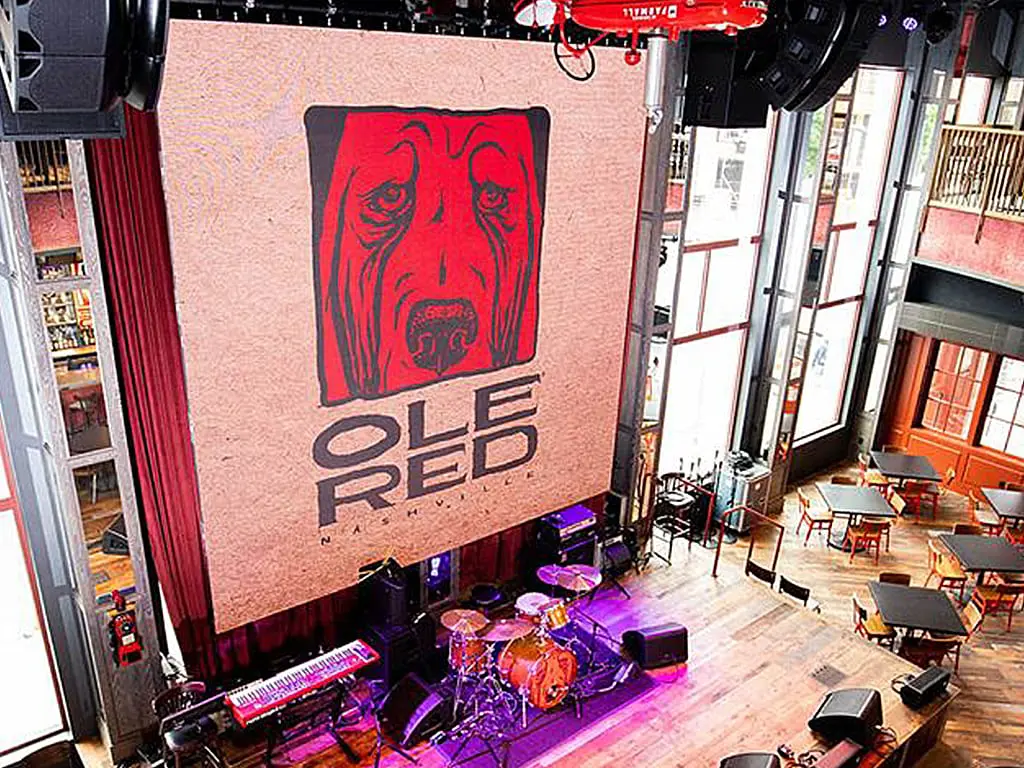
Communicate your brand’s message, stand out from the competition and engage your target market with LED digital signage.
View More
We offer creative solutions at cost-effective rates. You will be able to deliver your sermons more effectively and engage your congregation through one-of-a-kind lyric video walls and house of worship LED displays.
View More
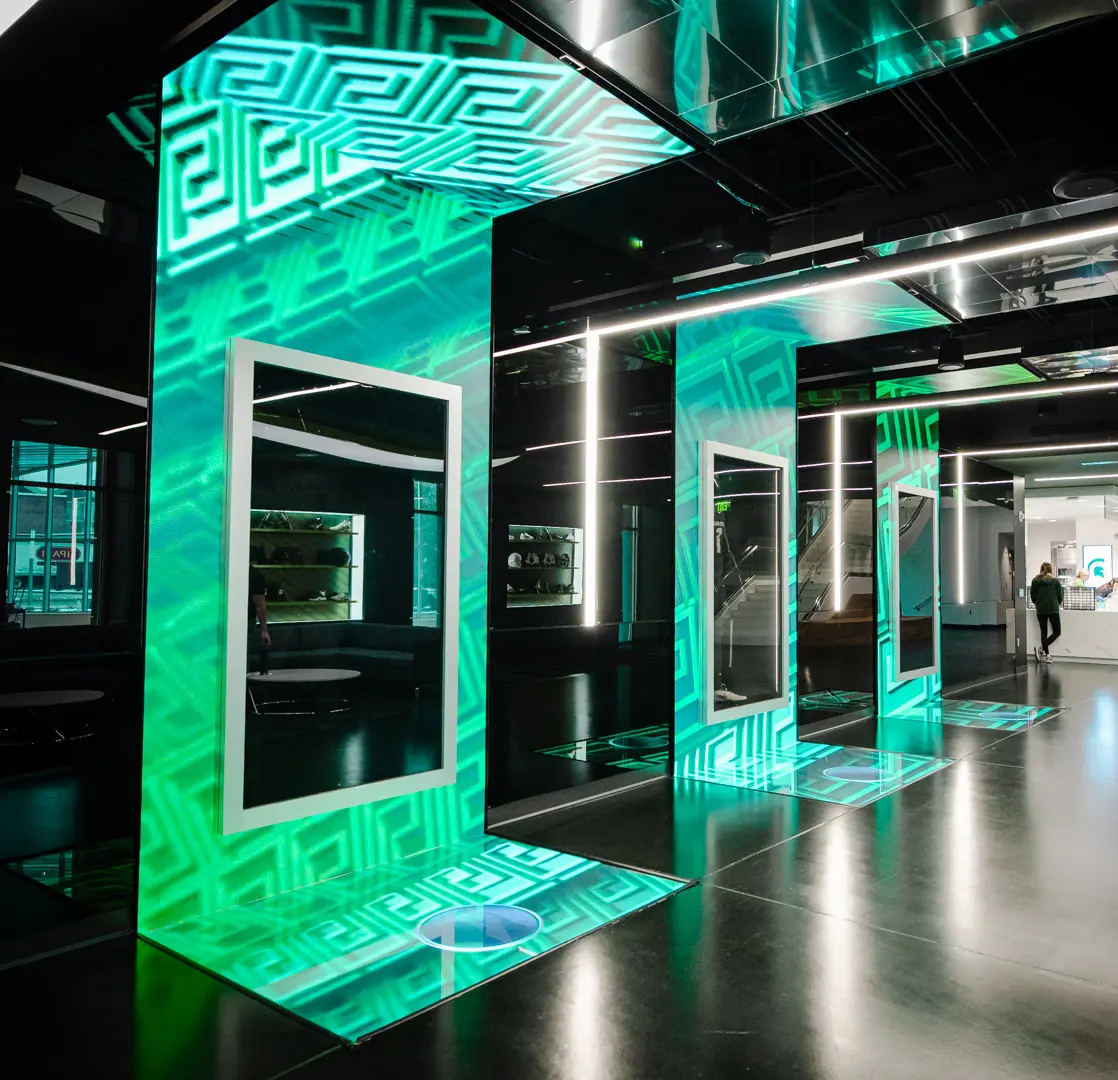
Enhance ambiance, display interactive directories and wayfinding displays, and promote amenities and events to elevate the guest experience.
View More
Incorporate digital displays to enhance your students’ learning experience and market to prospective students and donors.
View More
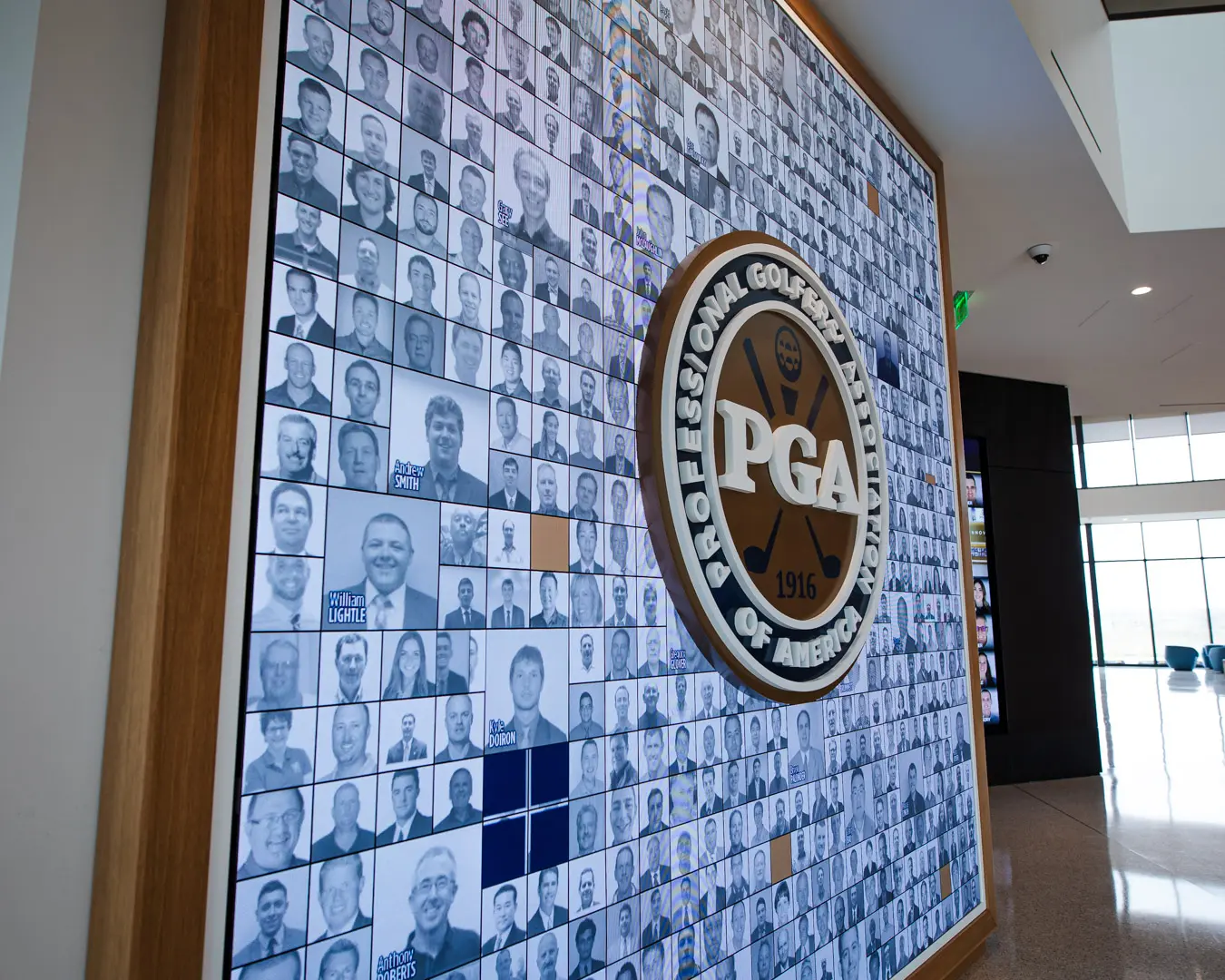
Transform your corporate spaces with PixelFLEX LED video displays. Enhance communication, elevate branding, and create dynamic environments.
View MoreChoosing an LED display panel now requires more than comparing pixel pitch and price. Global buyers must examine brightness, viewing distance, refresh rate, cabinet weight, energy use, service access, and warranty support. A 1.5 mm indoor panel may deliver sharp text in a control room, while a 6 mm outdoor panel may suit a highway-facing billboard. The wrong match can create visible scan lines, excessive power consumption, or costly maintenance.
Market evidence shows why this decision matters. MarketsandMarkets estimates that the global LED display market could grow from approximately USD 7.4 billion in 2023 to USD 12.3 billion by 2028, at a compound annual growth rate of 10.7%. Grand View Research also identifies rising demand for fine-pitch displays, commercial signage, stadium screens, and immersive installations. These figures suggest strong momentum, but they do not make every panel suitable for every project. That is the uncomfortable part.
“Pixel pitch is only one piece of the buying decision; the installation environment often determines real-world performance,” says David Haynes, an LED display industry consultant and technical writer. His observation reflects what experienced integrators see on site: sunlight, heat, rain, cable distance, and content type can matter just as much as resolution. This guide compares ten major LED display panel types for global buyers, from indoor fine-pitch modules to rental, transparent, outdoor, and creative-shaped systems. It focuses on practical specifications, application fit, and risks that product brochures sometimes understate. Performance looks impressive. Total ownership cost matters more.
LED display panels are classified by use, pixel pitch, brightness, structure, and protection level. The main types include indoor fine-pitch, indoor standard-pitch, outdoor fixed, outdoor rental, transparent, flexible, poster, perimeter, mobile, and all-in-one panels. Pixel pitch shows the distance between LEDs. Smaller pitches create sharper images at close viewing distances. However, they usually increase cost and installation demands.
Brightness matters outdoors. Indoor panels commonly need about 800–1,500 nits, while outdoor panels may require 4,000–8,000 nits under direct sunlight.
IP65 protection is widely selected for outdoor cabinet fronts. Rental panels also need lighter frames and fast-lock systems.
Grand View Research estimated the global LED display market at approximately USD 7 billion in 2023, with continued growth through 2030. MarketsandMarkets also identifies fine-pitch displays and outdoor advertising as strong application segments.
In practice, buyers should compare viewing distance, cabinet weight, refresh rate, service access, and power consumption.
A 1.5 mm panel may suit a control room, but it can be wasteful in a distant stadium.
High refresh rates help cameras capture cleaner images. Transparent panels preserve storefront visibility, yet their contrast can weaken in bright environments.
This classification is useful, but not perfect. Local climate, content design, and maintenance skills can change the best choice. Even experienced buyers sometimes overvalue resolution.
Global buyers now compare more than pixel pitch. MarketsandMarkets estimates the LED display market could grow from about USD 7.5 billion in 2024 to USD 10.2 billion by 2029. That expansion reflects demand across retail, transport, sports, and corporate spaces.
The ten core panel types serve different conditions. Fine-pitch indoor panels suit control rooms and premium meeting spaces. Standard SMD indoor panels support shops and event halls. COB panels offer stronger surface protection and close-view clarity. Rental panels use lightweight cabinets for touring productions. Fixed outdoor panels handle permanent advertising and public information. High-brightness outdoor panels remain readable under direct sunlight. Transparent panels preserve storefront visibility. Flexible panels fit columns, curves, and creative structures. LED poster panels support portable retail campaigns. Perimeter and scoreboard panels serve stadiums and sports venues.
Pixel pitch alone is not enough.
Grand View Research identifies brightness, viewing distance, and application requirements as major purchasing factors in its LED display market analysis.
Buyers should also check IP ratings, refresh rate, cabinet weight, service access, and regional electrical standards. Outdoor installations often need stronger weather protection and careful thermal planning. Indoor fine-pitch screens may expose poor calibration quickly, especially on skin tones and gray backgrounds. COB can reduce visible damage from light contact, but repair methods and spare-panel availability require closer review. I have seen specifications look excellent while maintenance access remained impractical. That gap deserves a second inspection.
Top 10 LED Display Panel Types for Global Buyers?
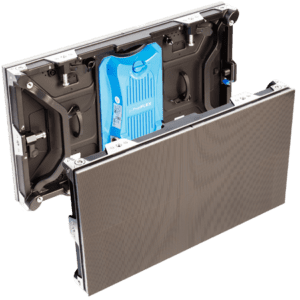
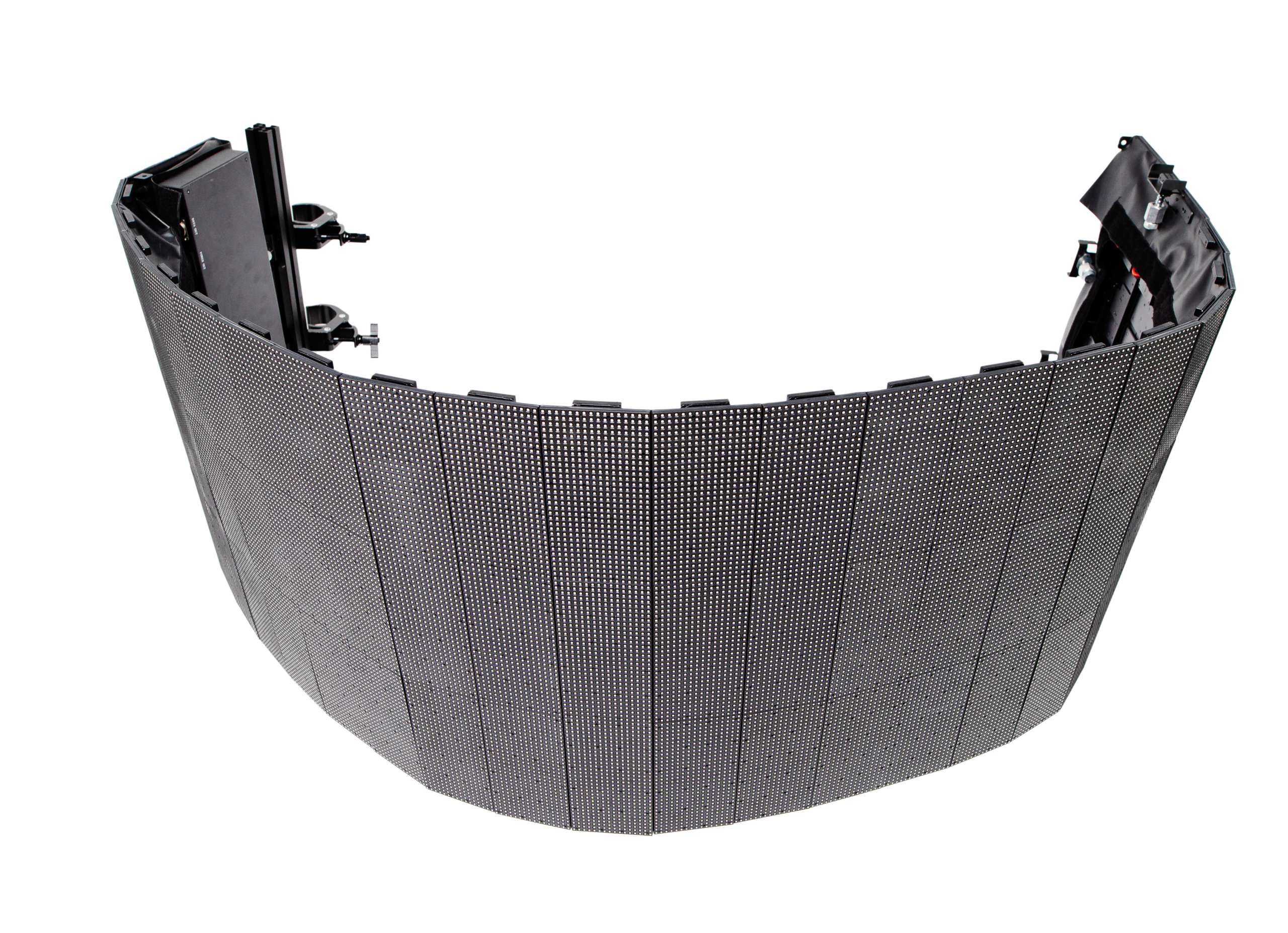
Specialized LED panels are changing how venues use visual space. Creative LED panels support curved stages, sculptural walls, and unusual viewing angles. Transparent panels preserve storefront visibility while adding animated content. Rental panels use lightweight cabinets, quick locks, and front-service access. Mobile displays add wheels, flight cases, and battery-ready configurations for temporary events. Flexible, floor, fine-pitch, outdoor, all-in-one, and corner panels complete the top ten.
According to Grand View Research’s 2024 LED Display Market report, the global market was valued at approximately USD 7.46 billion in 2023. It also forecasts continued growth through 2030. AVIXA’s 2024 Industry Outlook projects global professional audiovisual revenue to reach about USD 402 billion by 2029. These figures support demand, but they do not guarantee every panel suits every project.
A practical buyer should check pixel pitch at the real viewing distance, not only cabinet resolution. Transparent panels need measured light transmission and daytime brightness. Rental panels require repeated assembly tests, not just attractive specifications. Mobile systems need verified weight, wheel strength, and battery runtime. Outdoor installations require IP ratings, thermal testing, and maintenance planning. A common mistake is choosing the brightest panel. Excess brightness can reduce comfort and increase power use. Specification sheets can also hide calibration limits. Test a sample panel under actual lighting before approving the full order.
| Rank | LED Display Panel Type | Typical Pixel Pitch | Typical Brightness | Typical Transparency | Typical Weight | Common Protection Rating | Best-Fit Applications | Key Advantages | Main Buying Consideration |
|---|---|---|---|---|---|---|---|---|---|
| 1 | Fine-Pitch Indoor LED Panel | 0.9–2.5 mm | 600–1,200 nits | 0% | 20–35 kg/m² | Typically IP20 | Control rooms, boardrooms, broadcast studios, museums, premium retail | High image detail, close-viewing suitability, seamless large-format installation | Higher cost and stricter requirements for installation accuracy, heat control, and signal processing |
| 2 | Outdoor Fixed LED Panel | 3.9–10 mm | 4,500–8,000 nits | 0% | 30–55 kg/m² | Front: IP65 or higher; rear: commonly IP54–IP65 | Building facades, roadside advertising, stadiums, public information displays | High daylight visibility, weather resistance, and suitability for permanent installations | Requires structural assessment, adequate ventilation, drainage, and local permitting where applicable |
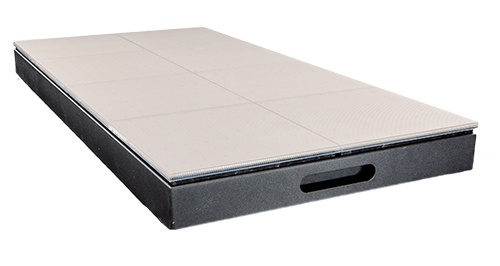
| 3 | Rental LED Panel | 2.6–5.9 mm | 3,500–5,500 nits | 0% | 8–16 kg per cabinet | Commonly IP30–IP65, depending on indoor or outdoor design | Concerts, exhibitions, conferences, festivals, touring productions | Fast assembly, quick-lock cabinets, stacking or hanging options, and efficient transport | Check cabinet durability, spare-part availability, corner protection, and tool-free maintenance features |
| 4 | Transparent LED Panel | 3.9–10.4 mm | 4,000–6,000 nits | 55%–85% | 12–18 kg/m² | Typically IP20–IP45; outdoor suitability varies by enclosure design | Glass facades, shopping malls, airports, atriums, architectural windows | Preserves daylight and exterior views while adding digital content with relatively low visual obstruction | Content contrast, viewing angle, mullion spacing, wind load, and glass or facade integration must be evaluated |
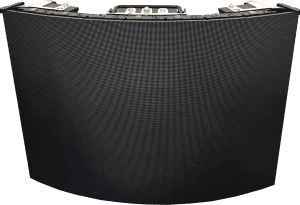
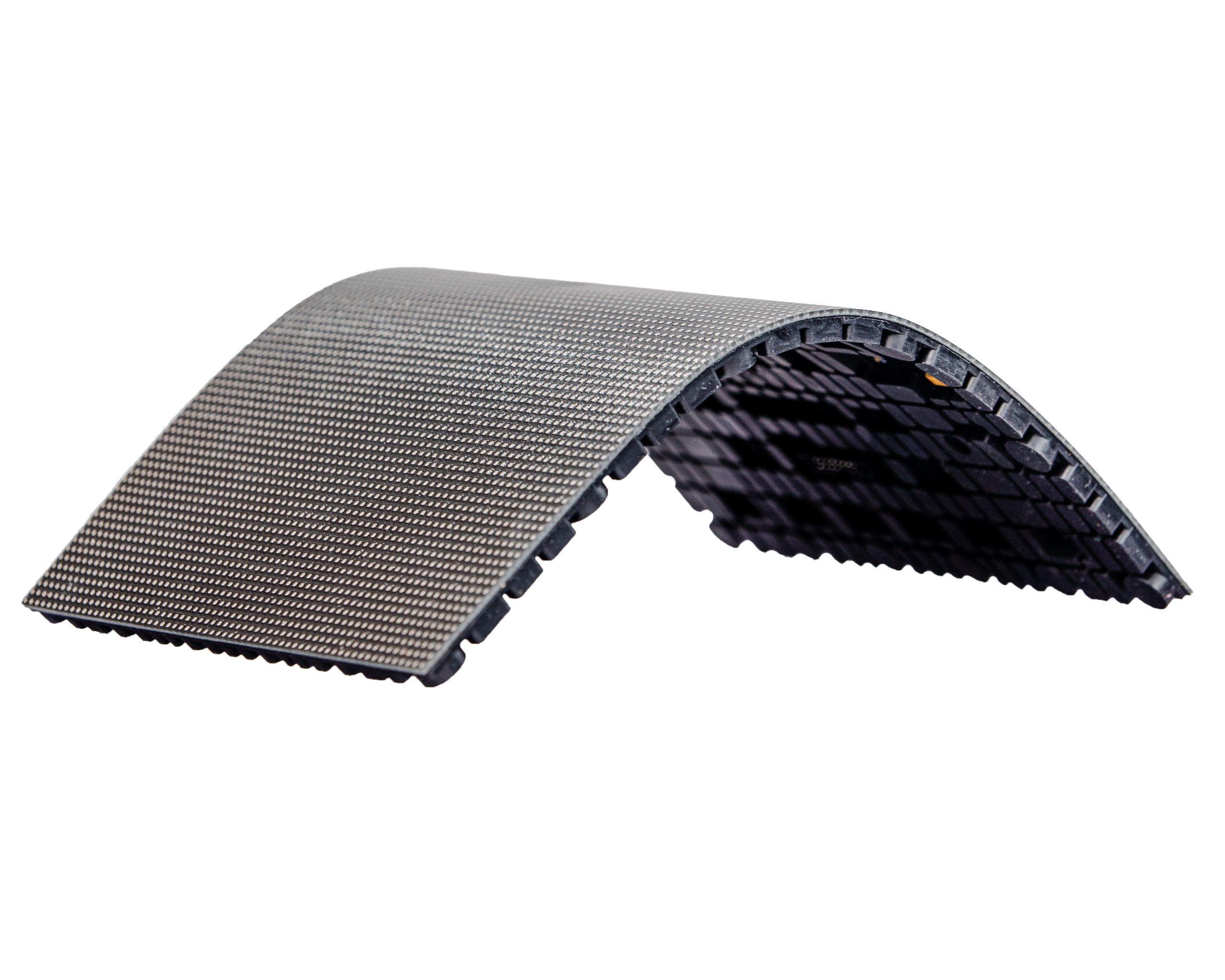
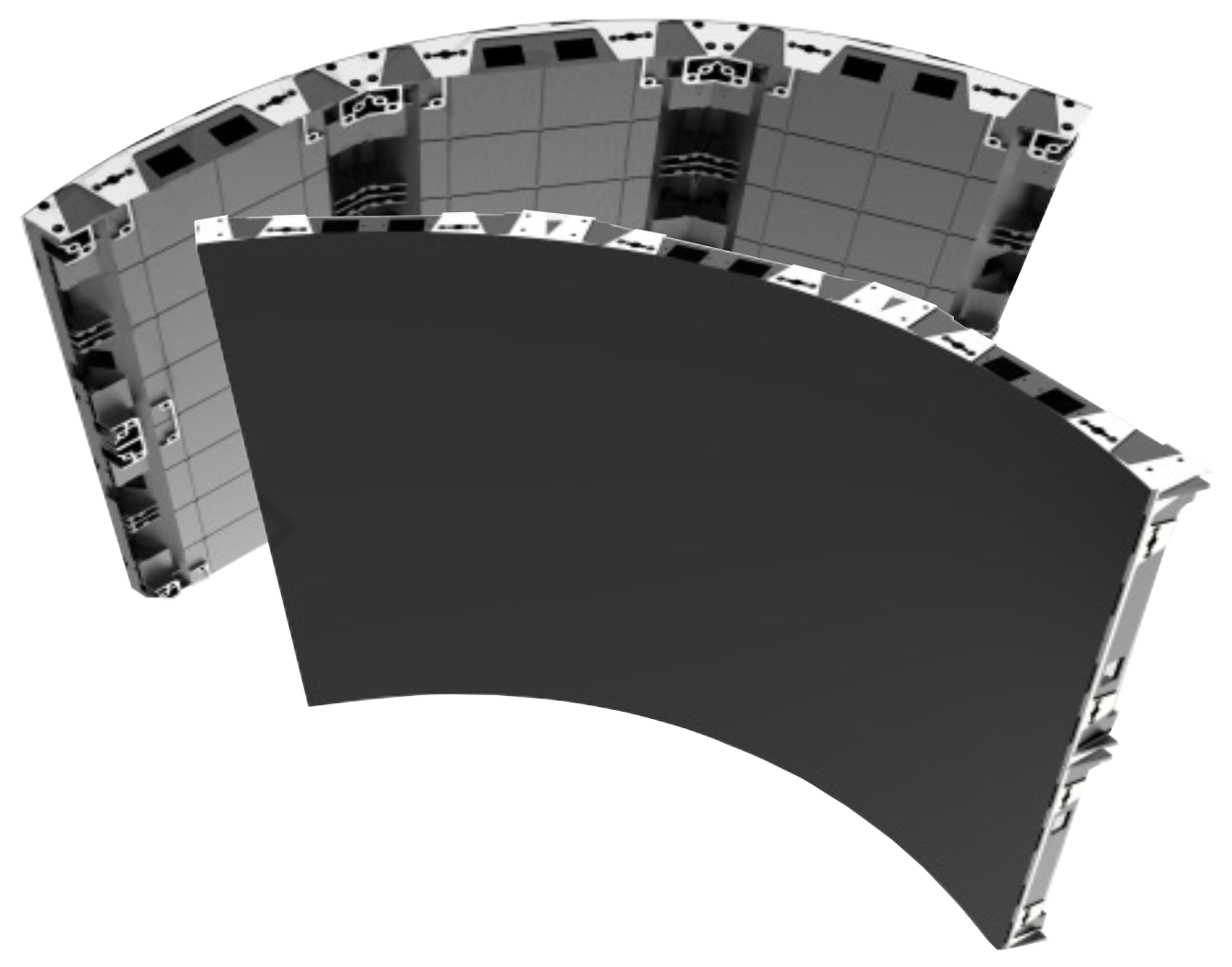
| 5 | Flexible LED Panel | 2.5–6 mm | 800–4,500 nits | 0% | 8–15 kg/m² | Usually IP20; special outdoor protection may be available | Curved columns, creative stage designs, rounded retail structures, artistic installations | Can conform to concave or convex surfaces and supports customized creative shapes | Confirm minimum bending radius, mounting method, heat dissipation, and long-term mechanical stress limits |
| 6 | 3D Naked-Eye LED Panel | 2.9–10 mm | 3,000–6,000 nits | 0% | 25–50 kg/m² | Indoor or outdoor rating depends on the cabinet system | Urban media facades, flagship retail, entertainment venues, landmark advertising | Creates depth effects without glasses when content, viewing position, and screen geometry are properly matched | Requires carefully designed perspective content, suitable viewing zones, and a compatible corner or curved structure |
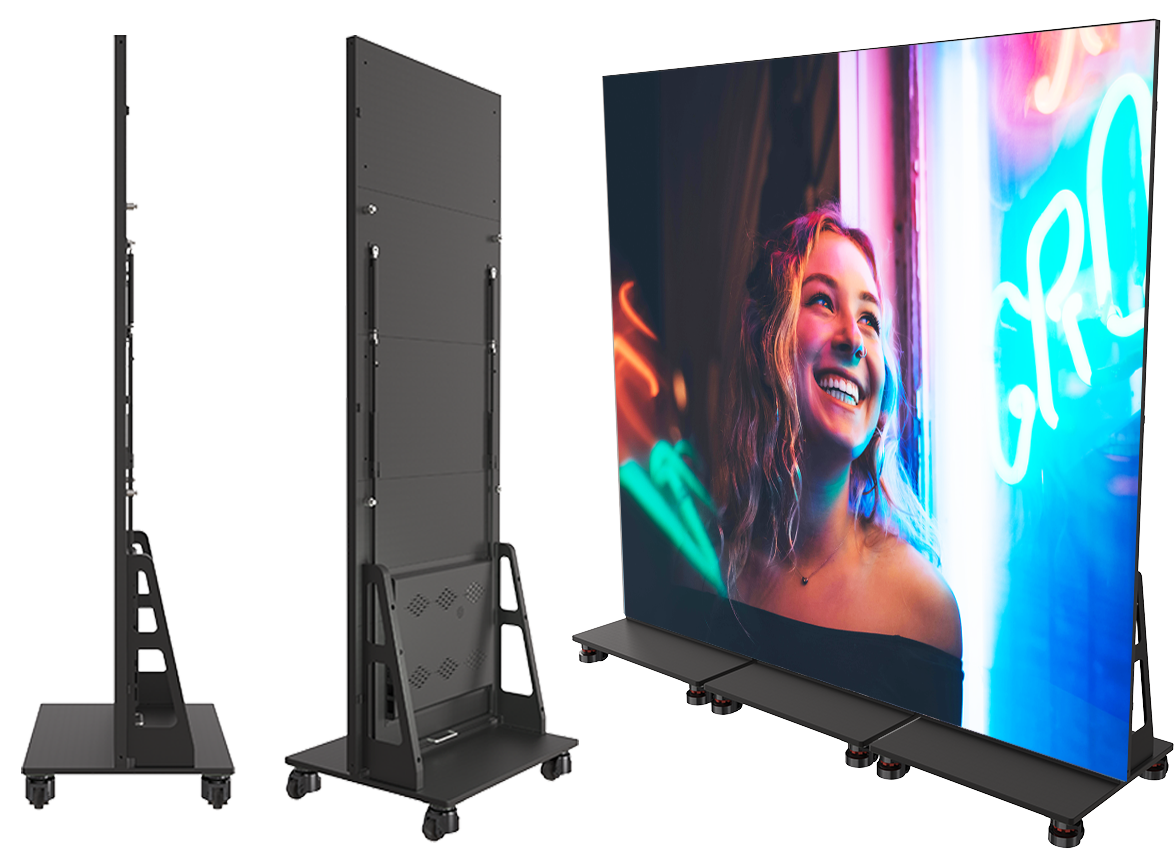
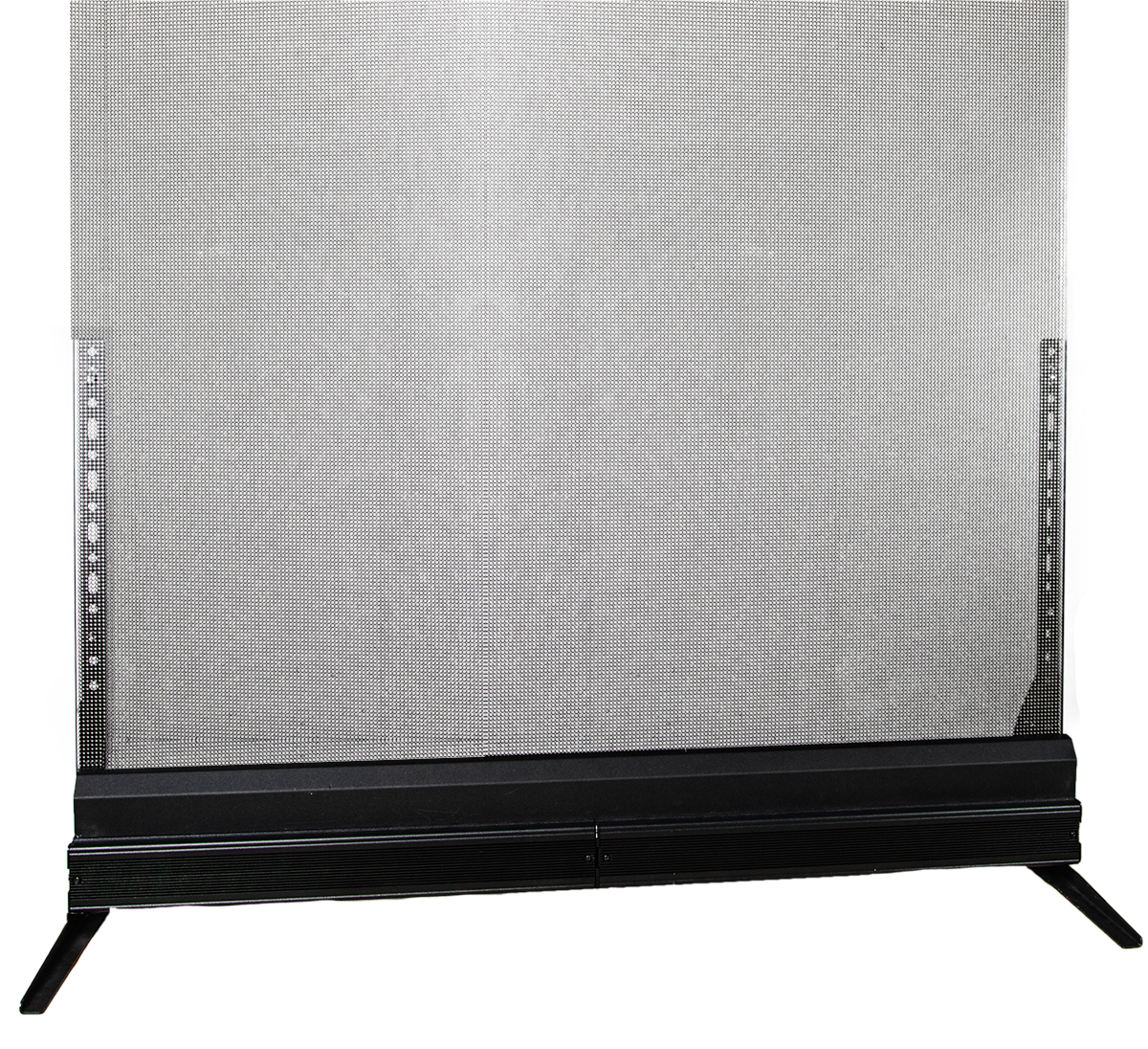
| 7 | Poster-Style LED Display | 2.5–4.8 mm | 800–5,000 nits | 0% | 25–45 kg per freestanding unit | Typically IP20 for indoor use; outdoor versions require appropriate enclosure protection | Retail stores, hotels, showrooms, events, reception areas, point-of-sale promotions | Portable form factor, built-in media functionality, and simple deployment compared with large video walls | Evaluate screen brightness, operating system compatibility, wheel or base stability, and content-management options |
| 8 | Mobile LED Truck or Trailer Display | 3.9–10 mm | 4,500–8,000 nits | 0% | Vehicle-dependent; display assemblies commonly weigh 300–1,500 kg | Outdoor-rated modules, commonly IP65 at the front | Roadshows, political events, sports promotions, emergency information, outdoor campaigns | Can move between locations and provides a large outdoor screen without a permanent structure | Check vehicle regulations, power generation, wind stabilization, transport dimensions, and operator safety procedures |
| 9 | Creative Shape and Cube LED Panel | 2.6–10 mm | 800–6,000 nits | 0% | 15–40 kg/m² | Indoor designs are often IP20; outdoor versions require a rated enclosure | Exhibition booths, themed entertainment, museums, branded environments, interactive art | Supports non-rectangular forms such as cubes, rings, curves, columns, and custom structures | Custom fabrication may affect lead time, pixel alignment, service access, spare modules, and installation complexity |
| 10 | Outdoor Perimeter LED Panel | 6–10 mm | 5,000–8,000 nits | 0% | 35–60 kg/m² | Typically IP65 at the front and weather-protected at the rear | Sports stadiums, arenas, race tracks, scoreboards, perimeter advertising | Designed for long-distance viewing, outdoor visibility, impact mitigation, and frequent content changes | Consider refresh rate, protective masks, impact resistance, viewing distance, and compliance with venue safety rules |
Note: Specifications are indicative industry ranges for comparison. Actual performance depends on LED package, cabinet design, operating environment, viewing distance, control system, installation method, and regional safety requirements.
Top 10 LED Display Panel Types for Global Buyers
Key Specifications Global Buyers Should Compare Before Purchasing
Common choices include indoor fine-pitch, outdoor, rental, transparent, flexible, poster, perimeter, traffic, GOB, and COB panels. Each type serves a different viewing distance, installation condition, and maintenance plan. Indoor fine-pitch panels suit close viewing, while outdoor panels need strong brightness and weather protection.
Pixel pitch should match the audience distance. Smaller pitch usually improves image detail but raises cost and power demand. Compare brightness, refresh rate, grayscale depth, contrast, viewing angle, and color consistency. A refresh rate above 3,840 Hz can reduce camera flicker, but it does not guarantee accurate colors. Request test images and video samples.
Protection ratings matter outdoors. Check the front and rear IP ratings, operating temperature, humidity range, and wind-load design. Review cabinet weight, module size, access direction, and spare-part availability. Power systems should show average and maximum consumption, not one attractive figure. Certification documents, factory quality records, warranty terms, and technical response times also deserve careful review. Field inspections often reveal loose connectors or uneven calibration. I have learned that a perfect specification sheet can still hide installation problems. Ask for a complete sample cabinet, then test it under realistic viewing and lighting conditions.
Typical industry values are shown for comparison. Actual specifications vary by pixel pitch, cabinet design, environment, calibration, and application. Buyers should also compare pixel pitch, viewing distance, IP rating, power consumption, cabinet weight, service access, and warranty terms.
Brightness is measured in nits (cd/m²). Indoor panels commonly operate below 1,500 nits, while outdoor and semi-outdoor panels often use approximately 3,500–6,000 nits. Refresh rates of 1,920–3,840 Hz are widely used for smooth video and reduced camera scan lines.
Choosing an LED panel starts with location, not brightness. Indoor fine-pitch, COB, SMD, poster, and all-in-one panels suit controlled environments. Outdoor, mesh, rental, transparent, flexible, and fixed-installation panels handle different constraints. Outdoor models need weather protection, while rental panels need fast locks and lighter cabinets. Flexible panels solve curved surfaces, but installation errors can create visible seams.
Content changes the decision. Fine text needs a smaller pixel pitch and suitable viewing distance. Sports and live video require high refresh rates, stable processing, and low scan artifacts.
A transparent panel can preserve storefront visibility, yet it usually sacrifices contrast. The “best” specification may fail at noon sunlight. It happens.
Budget planning should include power, structure, control systems, spare modules, and technician access. MarketsandMarkets projects the LED display market to grow from about USD 7.5 billion in 2023 to USD 11.1 billion by 2028. This growth increases choice, but not clarity. The U.S. Department of Energy reports that LED technology can use at least 75% less energy and last up to 25 times longer than incandescent lighting. However, display power depends heavily on brightness and content. A mostly white screen consumes more energy. Maintenance matters too. Front-service cabinets reduce disruption in tight retail spaces. Rear-service designs may cost less initially, but they can become expensive behind fixed walls. No report replaces a physical site survey.